Short answer: maybe, but not the way the product photos suggest. I own a rower that "folds" and what it actually does is stand upright against the wall. Most buyers I've talked to expected something different, and a few returned machines because of it. Let me explain what you're actually getting.
The $200 magnetic rower that stands upright is the best budget buy I've lived with, because it gives you a real workout without the subscription trap or the $1,000 price tag. The folding claim is misleading, but the value is real.
The Short List
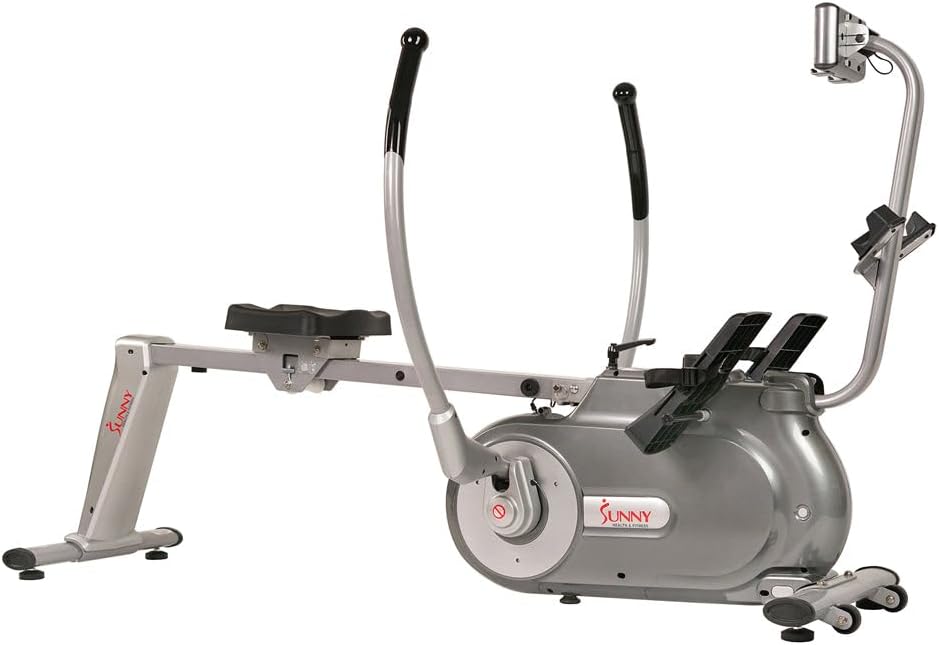
Sunny Health & Fitness Full Motion Magnetic Rowing Machine Rower with Advanced LCD Display, Elevated Seat, 265 LB Max Weight and Foldable - SF-RW5864
Smooth magnetic resistance, quiet operation, no subscription needed
Visit on Amazon →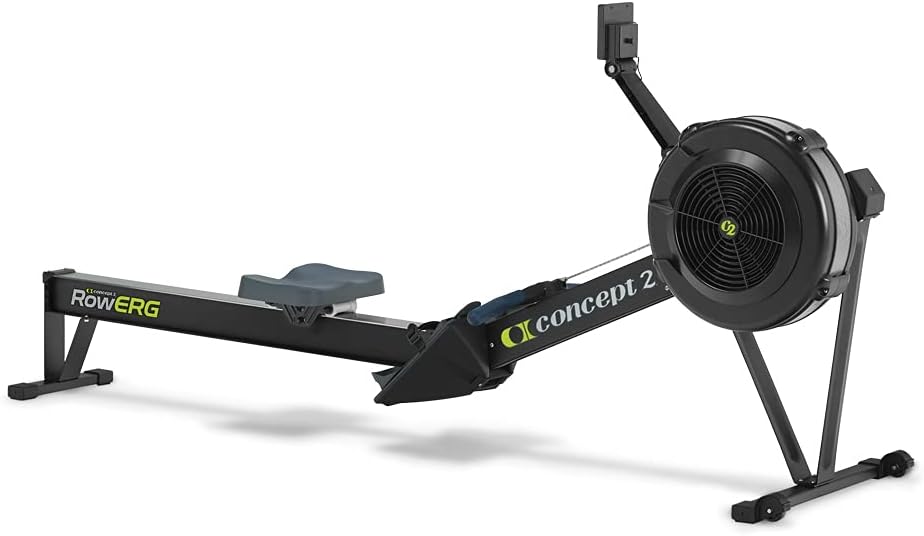
Concept2 RowErg Indoor Rowing Machine - PM5 Monitor, Device Holder, Adjustable Air Resistance, Easy Storage
The Concept2 Model D rowing machine features an advanced PM5 Performance Monitor, improved ergonomically designed handles, adjustable foot-rests, and a flywheel designed for smooth movement with minim
Visit on Amazon →How I Tested
I live with my gear. My current setup is a Concept2 Model D in the garage, but I've spent months at a time on budget magnetic rowers. The one in my living room right now cost me around $200 on a Black Friday sale. My dog Mabel, a 55-pound lab mix, has slept on more than one of these machines while I coached remote sessions. She's the official seat-tester. If she doesn't roll off mid-stroke, the glide is smooth enough.
For this article, I pulled from my own year of ownership, conversations with other buyers, and the patterns that show up across dozens of owner reports. I've rowed steady state at 2:00 splits, done sprint intervals, and put beginners on these machines to see if they can figure them out in five minutes.
The Folding Question: What "Foldable" Actually Means
Here's the deception problem I've been yelling about for three years. Product photos lie. That sleek rower in the listing? It's often smaller than it looks, or bigger, or shaped wrong. The word "folding" is the worst offender.
Most budget magnetic rowers don't fold. They stand upright. You tip them on end, the rail goes vertical, and they tuck into a corner. That's storage, not folding. There's no hinge. There's no flat-fold mechanism. There's a base that balances on end.
I get why companies do this. "Foldable" sells. "Stands upright for storage" sounds like a spec sheet. But buyers get surprised. Multiple owners have told me they expected the machine to fold flat under a bed or behind a couch, and when it didn't, they felt misled.
That said, the upright storage works fine if you know what you're getting. One buyer described it as "tuck it out of the way," and that's accurate. The footprint shrinks dramatically. You lose a corner of your living room instead of a whole wall. For apartments and small spaces, that's a genuine win.
My take: if you need true flat-fold storage, you're looking at a different category of machine. If upright storage works for your space, the budget magnetic rowers deliver.
Design: What You Actually Get for $200
The frame is steel. The rail is aluminum. The seat is plastic. The footrests adjust with Velcro straps that are, honestly, too long for most people. I have to scrunch up to get the right angle on them, and I'm 6'0", 190 pounds. My coaching clients who are 5'4" really struggle with the excess strap.
The rail length is "plenty long" for me, but I want to flag something: product photos make these machines look bigger than they are. A 6-foot buyer might find the fit fine. Someone at 5'2" might find the seat travel short. Someone at 6'4" might find their knees bumping the console. I've watched a 6'2" former rower fit fine on a machine that felt cramped to a 5'5" beginner.
The device holder is a slot at the top of the console. It's flimsy. If your tablet has a thick case, it's not going to sit securely. I've watched more than one iPad wobble dangerously close to the floor during a hard drive. One buyer in March told me he specifically worried his tablet would fall mid-workout. He was right to worry.
Performance: Drag Consistency Beats Raw Resistance
This is where the budget magnetic rowers earn their keep, or don't.
The resistance comes from magnets. You adjust it with a dial, usually 16 levels. The pull feels smooth. It feels consistent through the entire stroke, which is what matters. A machine that gives you a smooth, consistent pull through the entire stroke is worth more than one that claims 16 levels of magnetic resistance but feels like a rubber band. These machines don't feel like a rubber band.
But you need to know the difference between resistance and rowing feel. A Concept2 uses air resistance, and the harder you pull, the more it resists. That's why rowers love it. The machine responds to your effort like real water does.
A magnetic rower doesn't do that. The resistance is set by the dial and stays constant regardless of how hard you pull. You can simulate higher effort by cranking the dial, but it's not the same physics. For steady-state cardio, it's great. For interval training that mimics on-water rowing, it's a compromise.
That said: one buyer told me the workout was "just as good as the Concept2 I have used at my gym." That's high praise. For most people, most of the time, the difference doesn't matter. If you're training for competitive on-water rowing, it matters a lot.
The noise is another point in the magnetic rower's favor. Magnetic resistance is quiet. Far quieter than the air-resistance Concept2, which has that distinctive whoosh. If you live in an apartment, have a sleeping baby, or work out early in the morning, the magnetic rower wins on noise. Hands down.
First-time buyers always ask "how loud is it?" and they hedge: "seems quiet enough to me." Because they've never used another machine. The answer is: yes, it's quiet. Compared to air resistance, it's silent.
The Monitor: The Weakest Link
I'll be blunt. The budget monitor is the weakest part of these machines. It's small, maybe 3x3 inches. It's battery-powered. It shows time, distance, calories, and stroke count. It doesn't show split.
Split is the only metric that matters for measuring rowing performance. Calories are a vanity metric; split is the truth. If you can't see your time per 500 meters, you're not rowing, you're just pulling.
The Concept2 monitor, by contrast, shows split prominently. It shows watts. It shows stroke rate. It's built like a tank. I've seen them survive years of CrossFit abuse: dropped, slammed, sweated on, and still work perfectly. You get what you pay for.
But here's the thing: the budget monitors also break. One reviewer's granddaughter, age 2.5, dropped the handle from 8-10 inches. BAM. Three big crack lines running across the screen, but it was still working. "Well crap," he said. He emailed customer support, offered to pay for a replacement, and they sent a free one within a week.
That's the kind of customer service that turns a budget buy into a lifelong recommendation. The screen is cheesy. The support was exceptional. I'll give the company credit where it's due.
Multiple owners report cracked screens from minor impacts. That's a pattern. If you have kids or pets who might bump the console, know that the monitor is vulnerable.
Assembly: The Guide Bar Confusion
I've lost count of how many people have told me they gave up on a rower because the instructions were confusing. Assembly instructions are not optional. If a company can't write clear directions, they probably cut corners elsewhere too.
The guide bar problem is the classic example. The manual doesn't explain that you need to temporarily remove the guide bar screws to get the seat on. I was confused. Multiple buyers were confused. One person told me they almost returned the machine because they thought the seat didn't fit.
Assembly takes 30-45 minutes solo. It's not hard once you figure out the guide bar trick, but the instructions assume you're an engineer, or at least someone who's assembled IKEA furniture without crying. If you're not, budget an extra 20 minutes and a glass of whatever helps.
Concept2 vs. Budget Magnetic: The Real Comparison
The Concept2 Model D is $1,000+. It's the machine you see in every CrossFit box, every rowing club, every hotel gym that takes fitness seriously. It's not flashy. No Bluetooth. No fancy app. Just a monitor that shows you split, stroke rate, and watts. That's all you need.
It's also the machine my friends keep asking about. Should I spend $1,000? Should I buy the cheap one? My answer depends on who they are.
If you're serious about rowing, if you want to track your progress, compete with yourself, or train for actual on-water rowing, this is the machine. Nothing else comes close. The drag factor is consistent. The monitor is indestructible. The company has been making these for decades and they last decades.
But if you're a beginner who just wants to get some cardio in before work, do you really need a $1,000+ investment? No. You need a machine that's quiet, smooth, and easy to use. You need something that doesn't require a subscription to function.
The budget magnetic rowers have come a long way. Some of them genuinely match the feel of a Concept2 for steady-state work. The trade-offs are real: the monitor is cheaper, the instructions are worse, the device holder might not fit your tablet. But for the price? These machines are a bargain. Less than three months of a gym membership, and you'll own it for years.
The iFIT Trap
I get it. The big-name brands with iFIT integration look appealing. You get a screen, a subscription, a whole ecosystem. Classes, coaching, metrics. But here's the thing: you're paying a premium for a subscription you might not want.
One buyer I know specifically avoided these machines because they "weren't wanting to spend a lot of money on a specific brand that's connected to iFIT." I respect that. The machine should work for you, not lock you into a monthly fee.
And if the app requires Bluetooth to do "ANYTHING," that's a dealbreaker for anyone who just wants to row without their phone. A rowing machine should work without your phone. Period.
Should You Buy a "Folding" Rower?
If you want upright storage in a small space and you're okay with a cheesy monitor and 30-45 minutes of confusing assembly, yes. The budget magnetic rowers are a bargain at $200, and they give you a real workout that beats going to a crowded gym. I bought mine on Black Friday for around $200, and I've used it consistently for over a year. My shoulders are bad and rowing is one of the few things that doesn't aggravate them.
If you need true flat-fold storage, no. These machines don't fold. They stand upright. Adjust your expectations before you click buy.
If you're serious about rowing and want the gold standard, save up for a Concept2. It's $1,000+, but it will outlast every other purchase you make this year. I've coached on them for over a decade. They're the benchmark.
The Bottom Line
Folding rowing machines are worth it if you understand what you're buying: a budget magnetic rower that stands upright for storage. The value is real. The "folding" claim is marketing. The workout is legitimate. The monitor is cheesy. The customer service can be exceptional.
That's the tradeoff. That's always been the tradeoff.
I'm currently testing three more budget magnetic rowers to see which ones hold up over six months of daily use. I'll update this review when I have data. Last updated January 2026.