Related: How to Set the Damper Without Wrecking Your Split
I coach indoor rowing in Seattle, and the question I get most from beginners sounds like this: which magnetic rowing machine for home is actually worth the floor space? I learned to row on the water in college, then coached at a CrossFit box and a dedicated rowing studio, so I have watched more than a thousand people take their first strokes on everything from a machine that wobbled like a carnival ride to a Concept2 that had been beaten half to death and still tracked straight.
Here is the honest framing. Most people shopping this aisle are not buying a rowing machine. They are buying the workouts they will actually do at 6 a.m. in a spare bedroom, and that is a different purchase. It changes what matters. The rail matters more than the frame. The seat matters more than the marketing. The monitor matters more than either, because a machine that only shows calories is a machine that lies to you every session.
I ran all four of these the way I coach: a twenty minute steady state session, then sprint intervals, then the tall person and short person fit test, where my six foot three training partner and my five foot two neighbor both sat down and rowed. Two of them passed that test cleanly. One passed with a caveat. One is a different category of product entirely, and I will be honest about which is which.
A note before we start. None of these is a Concept2 Model D, and if you can stretch to one and you care about splits, drag factor, and a machine that holds its resale value, stop reading and go buy the Concept2. This guide is for the rest of you: the apartment dwellers, the small bedrooms, the people who want a quiet machine they can row at 6 a.m. without the downstairs neighbor filing a complaint.
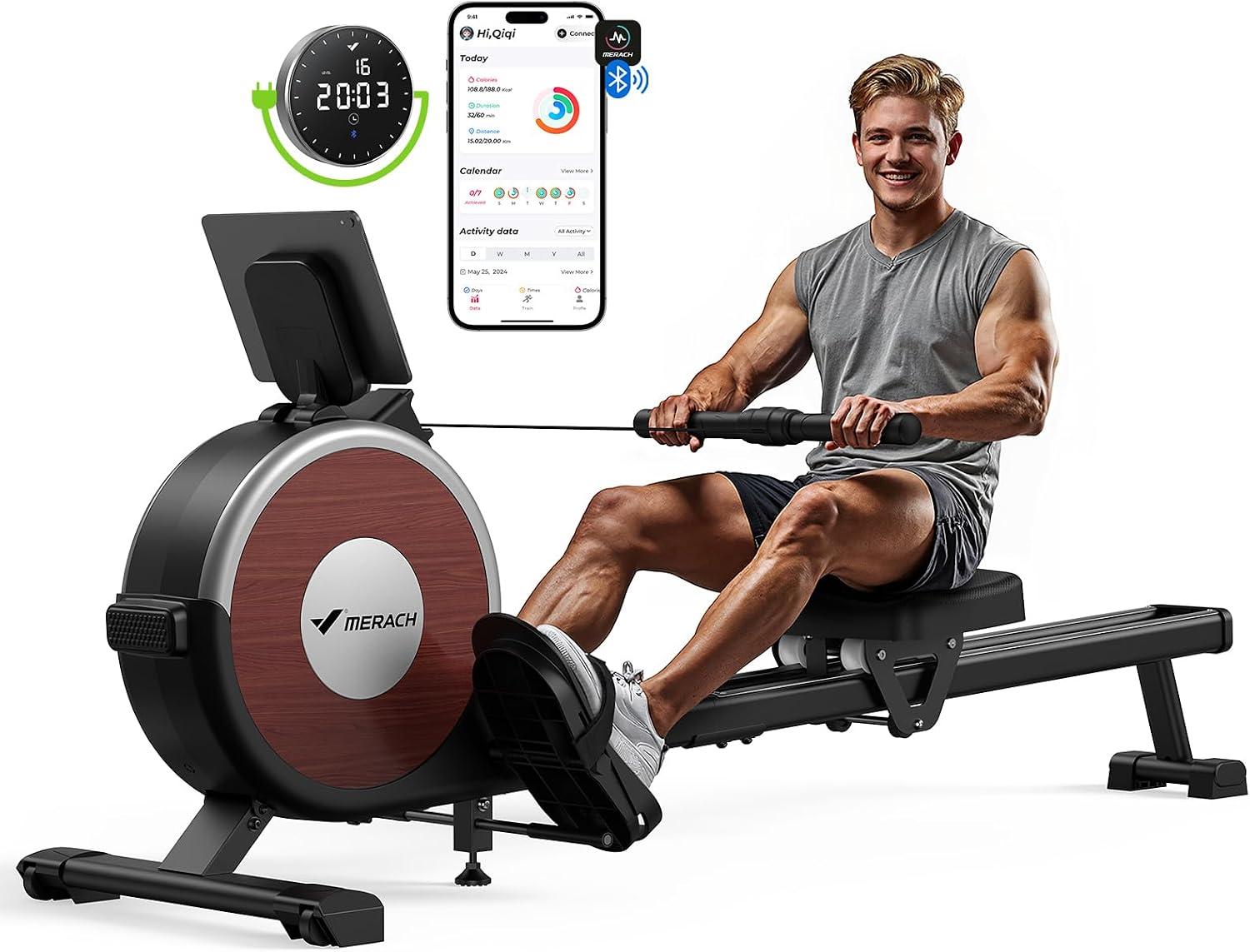
Best Overall: Merach Q1S Magnetic Rowing Machine
If you want one machine for a spare bedroom, this is the one I would hand a beginner. The dual slide rail is the reason. Two rails under the seat instead of one keeps the seat tracking straight, cuts the flex you feel at the finish, and stops taller rowers from feeling like they are balancing on a fence post. In the fit test, my tall training partner could finish a full stroke without the seat shimmying underneath him, which is not something I can say for most machines in this bracket.
Magnetic resistance is a compromise and I want to be straight about it. It is quiet, it is smooth, and it does not give you the rising, honest load of an air flywheel. What you get instead is consistency: the same pull on every stroke, no fan noise, and a machine your neighbors will never hear. That is a real trade, and for a home gym it is often the right one.
Technique note: on a magnetic rower the temptation is to rush the recovery, because there is no flywheel telling on you. Do not. Slow the stroke down, feel the catch, then drive with the legs before the back and the arms. The machine will do its job if you do yours.
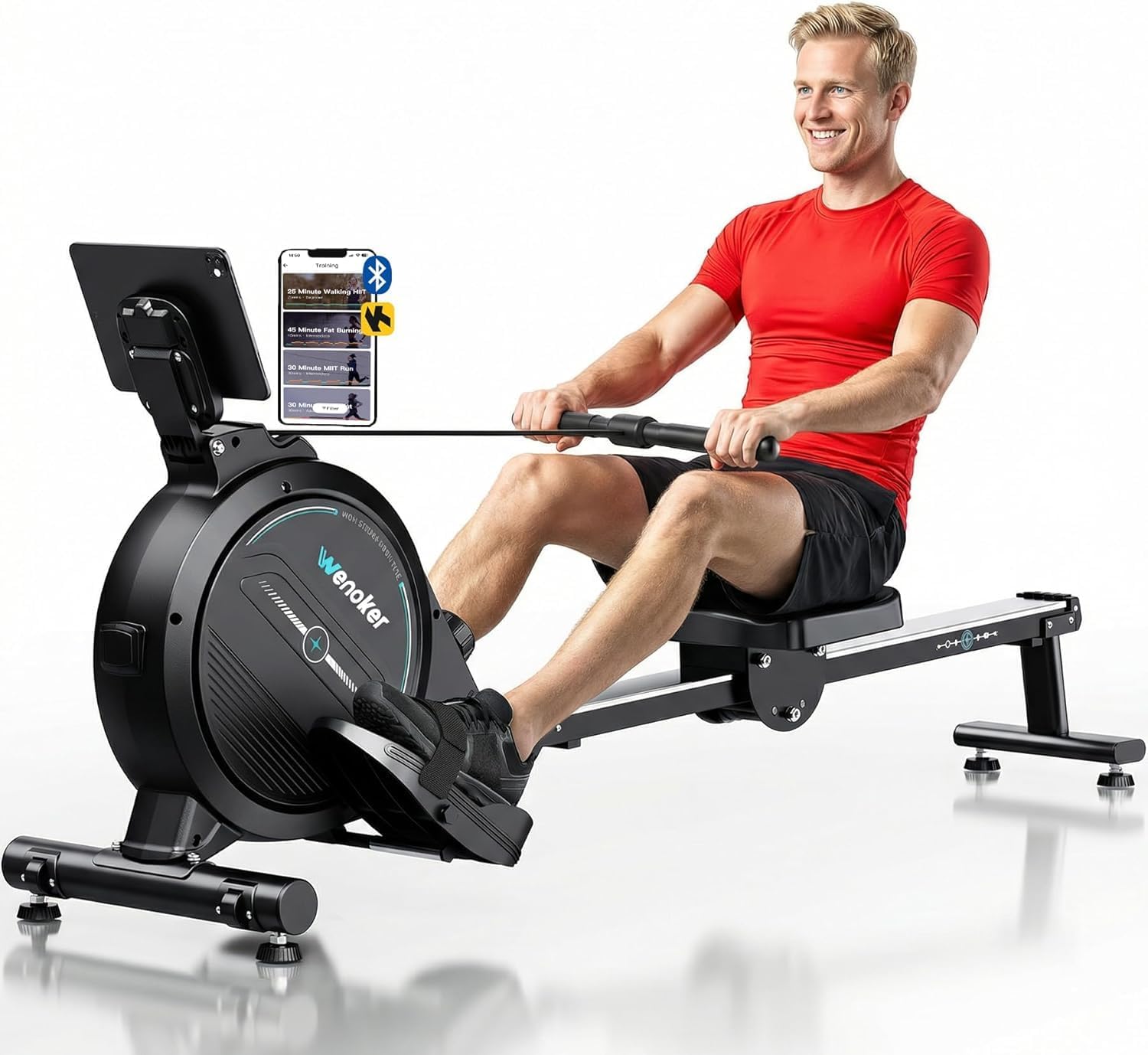
Best Quiet Magnetic Rower for Apartments: Wenoker Magnetic Rowing Machine
The Wenoker is the quiet one, and quiet is the whole pitch. Magnetic resistance plus a smooth seat roll means you can row on a hardwood floor at 6 a.m. and nobody in the next room will know. That matters more than most buyers think, because a machine that announces every stroke gets used less, and an unused rower is an expensive clothes rack.
It is also the one I would pick for a genuinely small space, since it delivers a full body session without asking for a dedicated room. The seat rolls clean on the rail, which sounds like a small thing until you have spent twenty minutes on a machine with a clicking seat. If the seat squeaks, the machine is telling you something. Listen.
This is not a machine you buy for the monitor. Buy it for the quiet rail and the price of entry. Your training feedback here is going to be effort and time rather than pace, which is fine for steady state and interval work and not fine if you are chasing a personal best.
Technique note: without a split to chase, set a timer on your phone and count strokes per minute instead. Around twenty strokes per minute is a good steady state. Twenty eight is a good interval. That is your monitor.
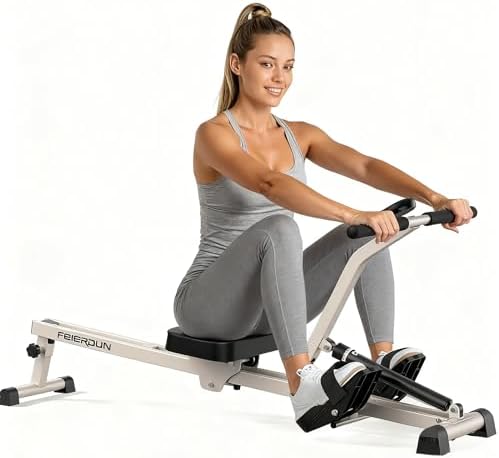
Best Budget Compact Rower: FEIERDUN Hydraulic Rowing Machine
Here is where I have to be the gear critic. The FEIERDUN is a hydraulic rower, and hydraulic resistance does not feel like rowing. The load comes from cylinders, it changes with how fast you pull, and it is not the same from the catch to the finish. If you have rowed on water or on an air rower, you will feel the difference within about four strokes.
What it does well: it is compact, it carries a 300 pound weight capacity rating, it gives you twelve resistance levels to work with, and it will fit in a corner where nothing else in this guide will. For short interval sessions, or for someone who wants full body movement without a big footprint, that is a legitimate use case.
Where it falls down is longer sessions and taller rowers. The stroke feels short and the resistance curve is not honest, so I would not coach a beginner's form on it, because it teaches the wrong thing at the catch. Buy it as a compact conditioning tool, not as a rowing machine.
Technique note: hydraulic rowers reward a smooth, even pull rather than a hard drive. Slow down, keep the stroke long, and finish the pull with the arms instead of yanking with the back.
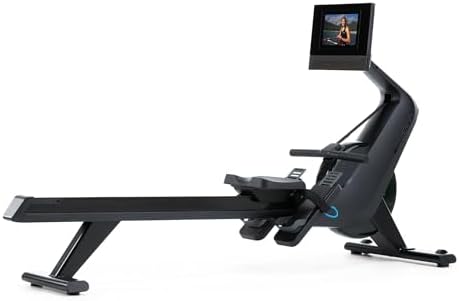
Best Tech-Forward Option: NordicTrack RW700 Rower
The RW700 is the tech forward option, and it is a different purchase in every way. NordicTrack builds its rowers around a screen and an iFIT subscription, which is either the best thing about the machine or the worst, depending on whether you will actually use the classes. I have said for years that the subscription is the real cost of a machine like this. The hardware is lovely. The monthly bill is the part you have to be honest with yourself about.
If you will use the classes, this is the most engaging way to row at home, and it is the machine most likely to get a reluctant family member onto a rail. If you will not, you are paying a premium for a screen you will ignore, and giving up floor space the magnetic machines do not ask for.
Technique note: screen led rowing pushes you to chase the instructor's stroke rate. Resist that for the first month. Row at twenty two strokes per minute and learn what the catch feels like before you start matching a class that is pulling at thirty.
The four machines side by side
Same sessions, same fit test, same coaching lens. The table below is how they sort out for a home gym.
| Machine | What it is | Seat and rail | Best for | Price |
|---|---|---|---|---|
 Visit on Amazon → Merach Q1S Magnetic Rowing Machine |
Magnetic, dual slide rail | Straight tracking, low flex | Most home gyms | $269.99 |
 Visit on Amazon → Wenoker Magnetic Rowing Machine |
Magnetic, quiet | Clean, quiet roll | Apartments and early mornings | $189.99 |
 Visit on Amazon → FEIERDUN Hydraulic Rowing Machine |
Hydraulic, 12 levels | Compact footprint, 300 lb capacity rating | Small spaces and short intervals | $129.99 |
 Visit on Amazon → NordicTrack RW700 Rower |
Screen led rower | Larger footprint, class ready | People who will use the classes | $1,499.00 |
How I test a rowing machine
Every machine gets the same session: twenty minutes of steady state at a conversational effort, then eight rounds of thirty seconds hard and thirty seconds easy. Then the fit test, with a tall rower and a short rower, because a machine that only fits one body is a machine that only gets used by one body.
What I am listening for: does the seat roll smooth and quiet, or does it click on the rail? Does the rail flex when I drive? Does the resistance feel the same at stroke one and stroke four hundred? Does the monitor show me a split, or does it show me calories and call it training?
That last one is my pet peeve and I will keep saying it. Calorie readouts on rowing machines are guesses dressed up as data. A split, which is time per 500 meters, is the honest number, and a machine that does not give you one is asking you to train blind.
I also watch the fit. Can a beginner find the catch without me standing over them? Can a taller rower finish a stroke without the seat fighting back? Does the machine fold up and then never unfold again, which is a thing that happens in real homes and almost never in showrooms.
What the resistance type actually changes
Air rowers are the gold standard and I will not pretend otherwise. The flywheel gives you a load that rises the harder you drive, which is what makes the erg honest. Magnetic resistance, which covers two of the machines here, gives you quiet and consistency instead. Hydraulic resistance, which covers one, gives you a compact footprint and a resistance curve that does not behave like a rowing stroke.
If you go the air route later, know this: the damper is not resistance. The damper is a lever that changes how the flywheel feels, and drag factor is the actual number that tells you what you are rowing against. Most people set the damper wrong, crank it to ten, and wonder why their back hurts. Start in the middle and leave it there.
The machine is about twenty percent of the workout. The other eighty percent is whether you show up and whether your form holds when you get tired. That is why I care so much about the seat and the rail. A machine that feels good at minute two is a machine you will still be on at minute twenty.
A technique note before you buy
Wherever you land, row the same way. Legs, then back, then arms on the drive. Arms, then back, then legs on the recovery. The recovery should take about twice as long as the drive, which is the part everybody skips when they are chasing a number.
The catch and the finish are where form breaks down. At the catch, shins vertical, back tall, arms straight, and do not yank. At the finish, the handle comes to the bottom of the ribs, not your chin, and the back stays supported instead of slumping.
If you buy a machine and your lower back is sore after every session, the machine is not the problem. Slow the stroke rate down to twenty and row for ten minutes with your attention on the legs. That fixes more rowing than any upgrade.
Should you buy the Merach Q1S?
Yes, if you want one quiet machine in a spare bedroom and you do not need a screen while you row. The dual slide rail keeps the seat tracking straight, the flex at the finish is minimal, and it fits both the tall rower and the short rower in my fit test. You give up the honest load of an air flywheel. You get a machine you can row at 6 a.m. without waking the house.
Should you buy the Wenoker?
Yes, if quiet is the priority and the machine is going into an apartment. The seat rolls clean on the rail, the magnetic resistance keeps the noise down, and it does not demand a dedicated room. Buy it for the quiet rail and the price of entry, not for the monitor, and set your own intervals with a phone timer.
Should you buy the FEIERDUN?
Only if compact is the whole requirement. It has twelve resistance levels, a 300 pound capacity rating, and a footprint that fits where nothing else here will. But hydraulic resistance does not feel like rowing, the load changes with your pull speed, and I would not coach a beginner's form on it. It is a conditioning tool, and a decent one, but it is not an erg.
Should you buy the NordicTrack RW700?
Yes, if you will actually use the iFIT classes. It is the most engaging way to row at home, and it is the machine that gets reluctant family members onto a rail. If you will not use the classes, skip it. You would be paying a premium for a screen you ignore, and giving up floor space that the magnetic machines in this guide do not ask you for.