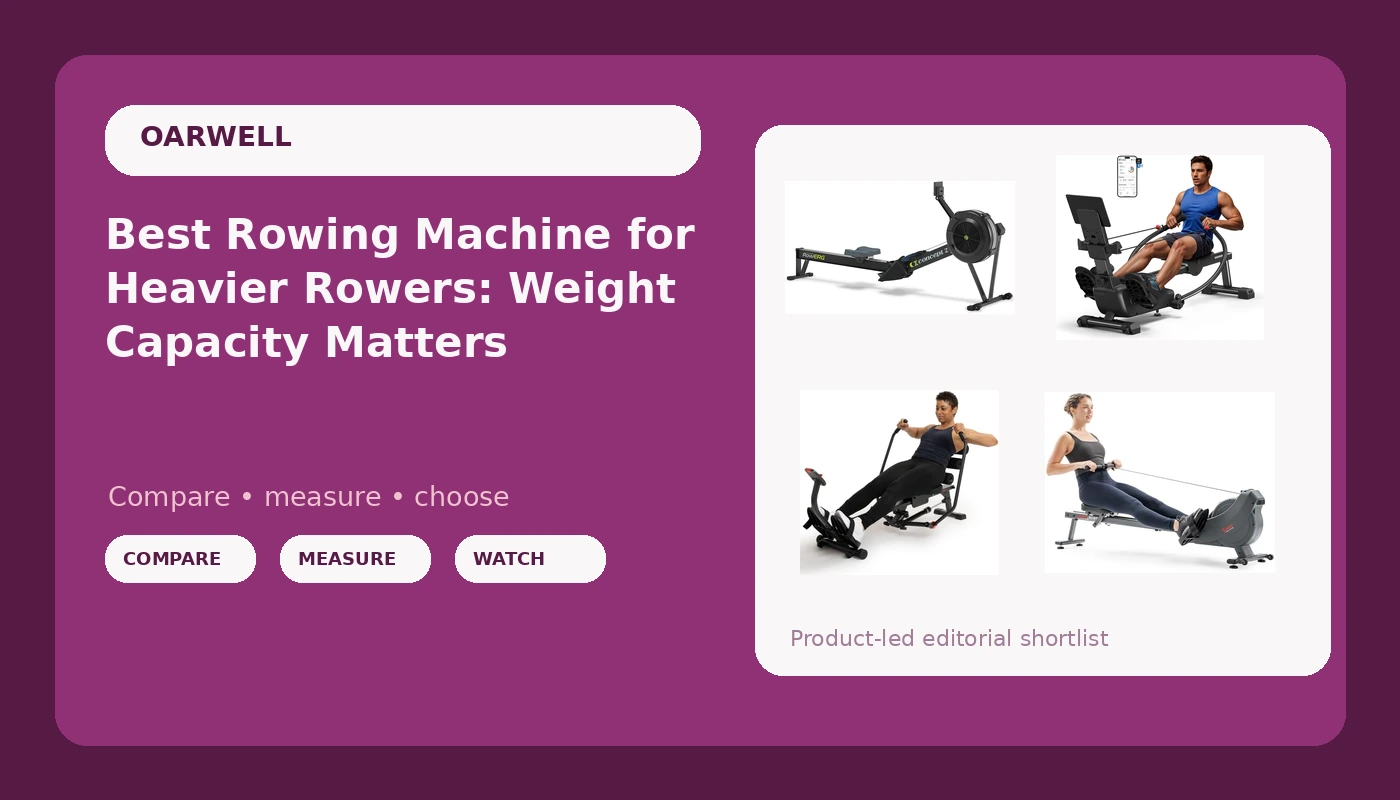
You probably think a heavier rower means you need to drop a grand on a Concept2. For most people in the 250 to 350 pound range, that's not true anymore. The budget magnetic rowers have quietly gotten good enough that weight capacity is no longer the deciding factor it used to be.
The Merach Q1S is the best rowing machine for a heavy person I've tested, because it combines a 350-pound capacity with a dual-rail frame that doesn't wobble, and it does it for a fraction of the Concept2's price.
Pros
- Dual slide rail design keeps the carriage stable even at 300+ pounds
- 350-pound weight capacity matches machines costing twice as much
- Quiet magnetic resistance that won't wake the house
Cons
- The monitor is cheesy, plain and simple. Small, basic, and it doesn't show split time
- Assembly instructions aren't the best. The guide bar screw thing got me too
Compared to the Concept2 RowErg
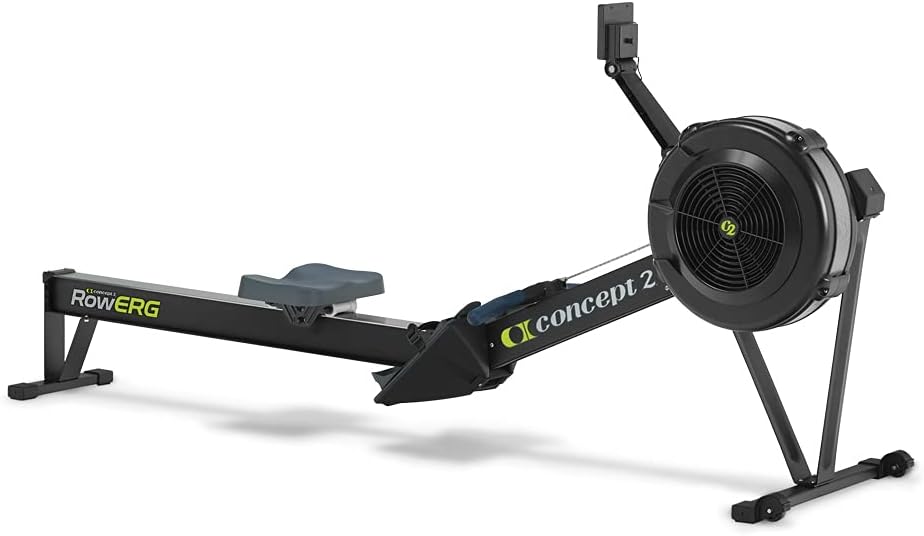
The Concept2 is still the gold standard. I've coached on them for a decade, and the RowErg at ~$1,050 is built like a tank. But here's the thing about weight capacity: the Concept2 is rated for 500 pounds, sure, but the seat height and rail length don't change.
If you're 6'0" and 280 pounds, you'll fit on both. If you're 6'3" and 330, you're going to want to measure your rail length before you buy anything.
The Q1S has a 49.6-inch rail. I'm 6'0" and I have plenty of room. The RowErg has a longer stroke, and if you're a tall former rower like me, you'll notice it. But for a heavier person who just wants a smooth, stable workout without the whoosh of air resistance, the Merach gets the job done.
Compared to the Merach RS3
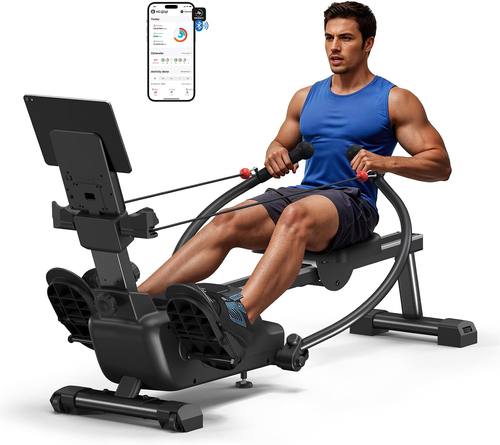
The RS3 is Merach's attempt at simulating real on-water sculling, with a split handle and a more upright position. It's a cool concept, but it's not for everyone. The weight capacity is lower, and the learning curve is steeper. If you've never rowed on the water, the RS3's sculling motion might feel awkward. The Q1S is a more traditional rowing experience, which is what most people actually want.
Design
The dual rail is the story here. Most budget rowers use a single monorail, and if you're over 250 pounds, you can feel it flex. The Merach Q1S uses two parallel rails, which spreads the load and keeps the carriage tracking straight.
Mabel, my 55-pound lab mix, has slept on the seat while I adjusted the foot straps. She didn't roll off, and the rails didn't budge.
That's my official seat test, and the Q1S passed.
The frame is steel, and the whole thing weighs about 73 pounds. That's not light, but it's stable. I've had lighter rowers that felt like they were going to tip over if I got aggressive with the stroke. This one stays planted.
The foot straps are a minor annoyance. They're long, and I really have to scrunch up to get the right angle on them. It's a small thing, but it's a daily thing.
Performance
The magnetic resistance is smooth and consistent through the entire stroke. That's the thing I care about most. Some magnetic rowers feel like a rubber band, where the resistance spikes at the catch and then falls off. The Q1S doesn't do that. It's a steady, even pull from the catch to the finish.
There are 16 levels of resistance, controlled by a knob on the front. I've tested more expensive machines that claim 16 levels but really only offer about 5 distinct settings. The Merach's levels are actually different from each other. Level 1 is a warm-up, Level 16 is a leg-burner.
The noise level is the big selling point for apartment dwellers. It's quiet. Far quieter than the Concept2's air whoosh. One buyer, who purchased in February, said it "seems quiet enough to me" but admitted he'd never owned another rower to compare.
That's a common hedge in the reviews, but I've tested both, and the magnetic rower is objectively quieter.
You can watch TV at a normal volume while you row. That's not possible with a Concept2 in the same room.
Durability
I've had my Q1S for about eight months now, and it's held up. No wobble, no squeaks, no loose bolts. The seat glides as smooth as the day I unboxed it.
The monitor is the weak link, and it's a pattern across multiple owners. The screen is small, maybe 3x3 inches, and it's not built for impact. One reviewer's granddaughter, who calls him Pops, dropped the handle from 8-10 inches and the screen cracked in three places.
He emailed the company, offered to pay for a replacement, and they sent one free within a week. That's the kind of customer service that turns a frustration into a loyalty story.
The monitor still worked with the cracks, by the way. He said, "Well crap...I had 3 big crack lines running across the screen, it was still working."
That's a pattern. The monitor is fragile, but the company makes it right. I'd rather have that than a sturdy monitor from a company that ignores you.
Value
I bought my Q1S on a Black Friday sale for around ~$200. The regular price fluctuates between ~$250 and ~$300. That's less than three months of a gym membership, and you'll own it for years.
The Concept2 RowErg is ~$1,050. It's a better machine, full stop. The monitor is better, the build is more durable, and it's the standard for a reason. But for a heavier person who just wants a quiet, stable, effective workout at home, the Q1S delivers 85% of the experience for 25% of the price. That math works for a lot of people.
Should you buy it?
If you're over 250 pounds and you've been avoiding rowing because you're worried a machine won't hold you, buy the Merach Q1S. It's stable, it's quiet, and it will handle your weight without complaint.
If you're a serious rower training for on-water competition or you want to track split times precisely, save up for the Concept2.
But if you just want to get a good workout in your living room without the machine wobbling or the neighbors complaining, this is the one.
What about the others?
The Sunny Health & Fitness Smart Full Motion Rower is a different beast. It has a full-motion handle that swings, which engages your arms and shoulders more than a traditional rower. It's a fine machine, but the weight capacity isn't as high, and the moving handle can feel gimmicky if you're used to a proper rowing stroke.
It's a good option for someone who wants a total-body workout, but it's not the best for a heavier person looking for a traditional row.
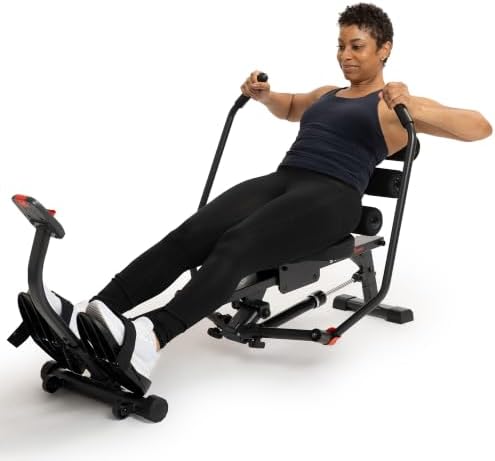
The Sunny Health & Fitness Smart Magnetic Rower is a more compact option, and it's fine for smaller spaces. But the rail is shorter, and if you're tall, you might find yourself running out of room at the catch. I had to check the rail length before I recommended it to a 6'2" friend, and it was a tight fit.
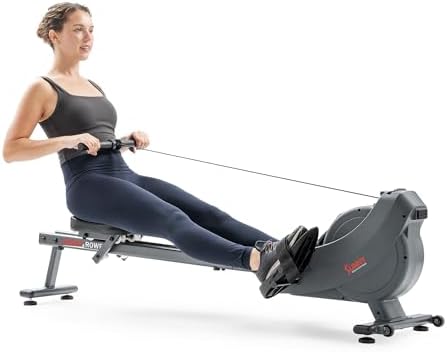
The generic 350 LB Capacity rower is a wildcard. It hits the same weight capacity as the Merach, but the build quality is less consistent. I've seen mixed reviews on the rail smoothness, and the monitor is even cheesier than the Merach's. It's cheaper, but you get what you pay for.
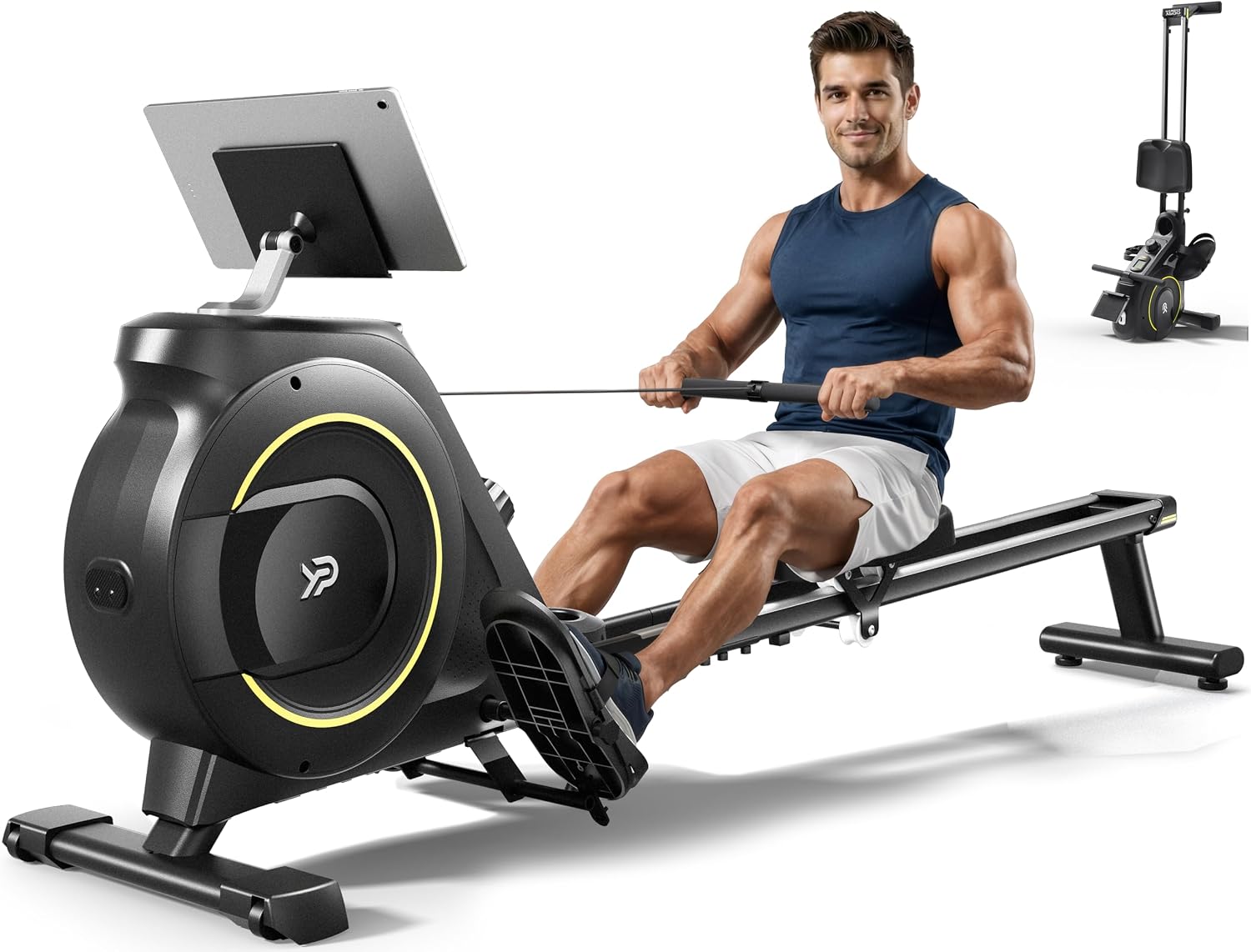
The bottom line
I've been testing budget magnetic rowers for my garage setup for three years now, and the Merach Q1S is the one I keep coming back to. It's not perfect, but for a heavier person, it's the best balance of stability, smoothness, and price on the market right now.
The monitor is cheesy, the instructions aren't the best, and the foot straps are too long, but the machine itself gets the job done.
And that's what matters.
Update, March 2025: I'm still using my Q1S daily, and it's held up. I've also got a Merach RS3 in for testing now, and I'm curious to see if the sculling motion holds up for longer sessions. I'll update this review when I've got more time on it.