
Related: Rowing Machine Monitor Settings Explained
You probably think you need to spend $1,000 to get a decent rowing workout. I used to think that too, back when I was coaching at a CrossFit box and every machine in the place was a Concept2. But I've spent the last three years testing budget magnetic rowers from my garage, and I've learned that resistance is a lot more complicated than a number on a dial.
The best machine for you depends on what kind of resistance you actually want, how much noise you can tolerate, and whether you care about split times or just breaking a sweat.
I've pulled on everything from a $200 wobble-fest to a $3,000 tank, and the differences matter.
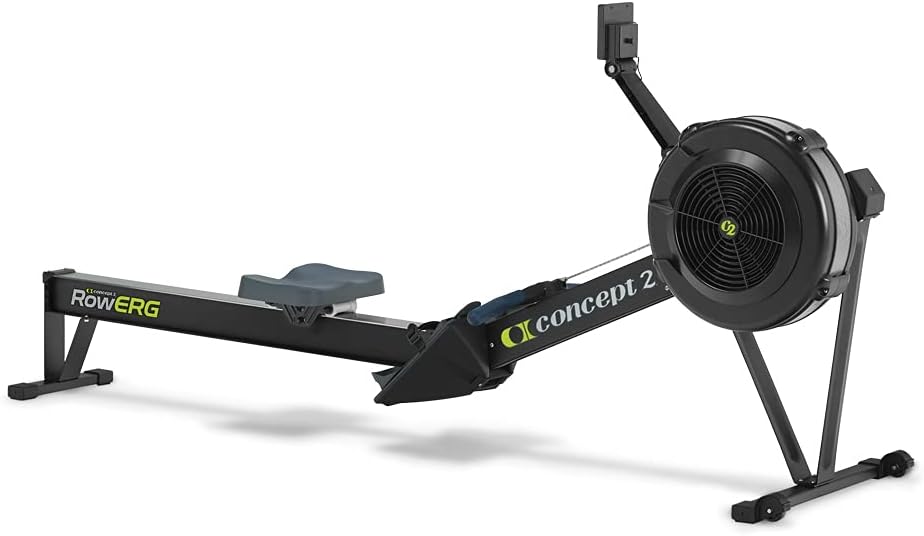
Concept2 RowErg Indoor Rowing Machine - PM5 Monitor, Device Holder, Adjustable Air Resistance, Easy Storage
Gold standard for split tracking, durability, and community support
Visit on Amazon →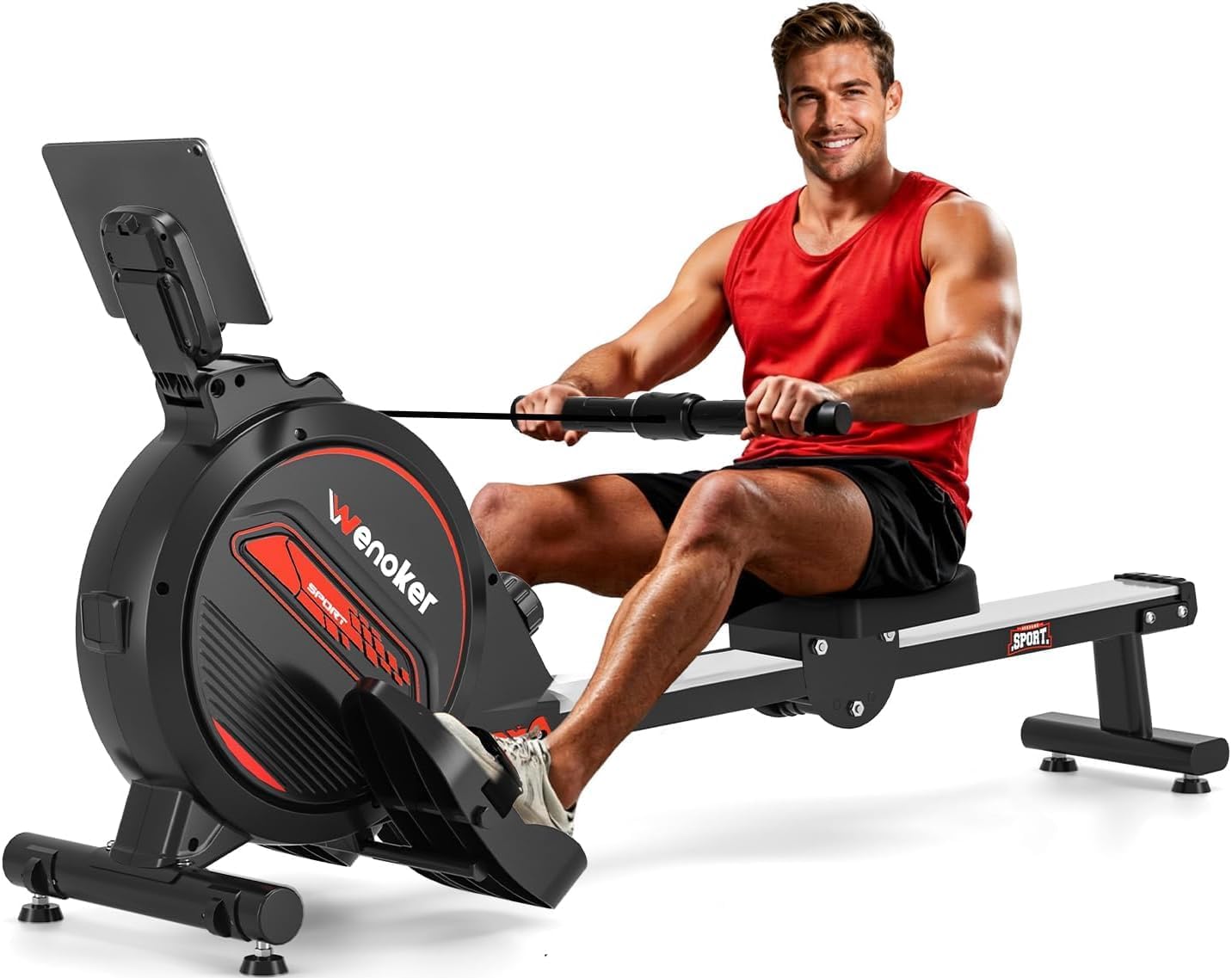
Wenoker Magnetic Rowing Machine for Home,Quiet & Smooth,Full Body Workout
Wenoker Rowing Machine for Home, Magnetic Rower Machine, 350 LB Weight Capacity, 16-Level Silent Resistance Row Machine for Gym Exercise
Visit on Amazon →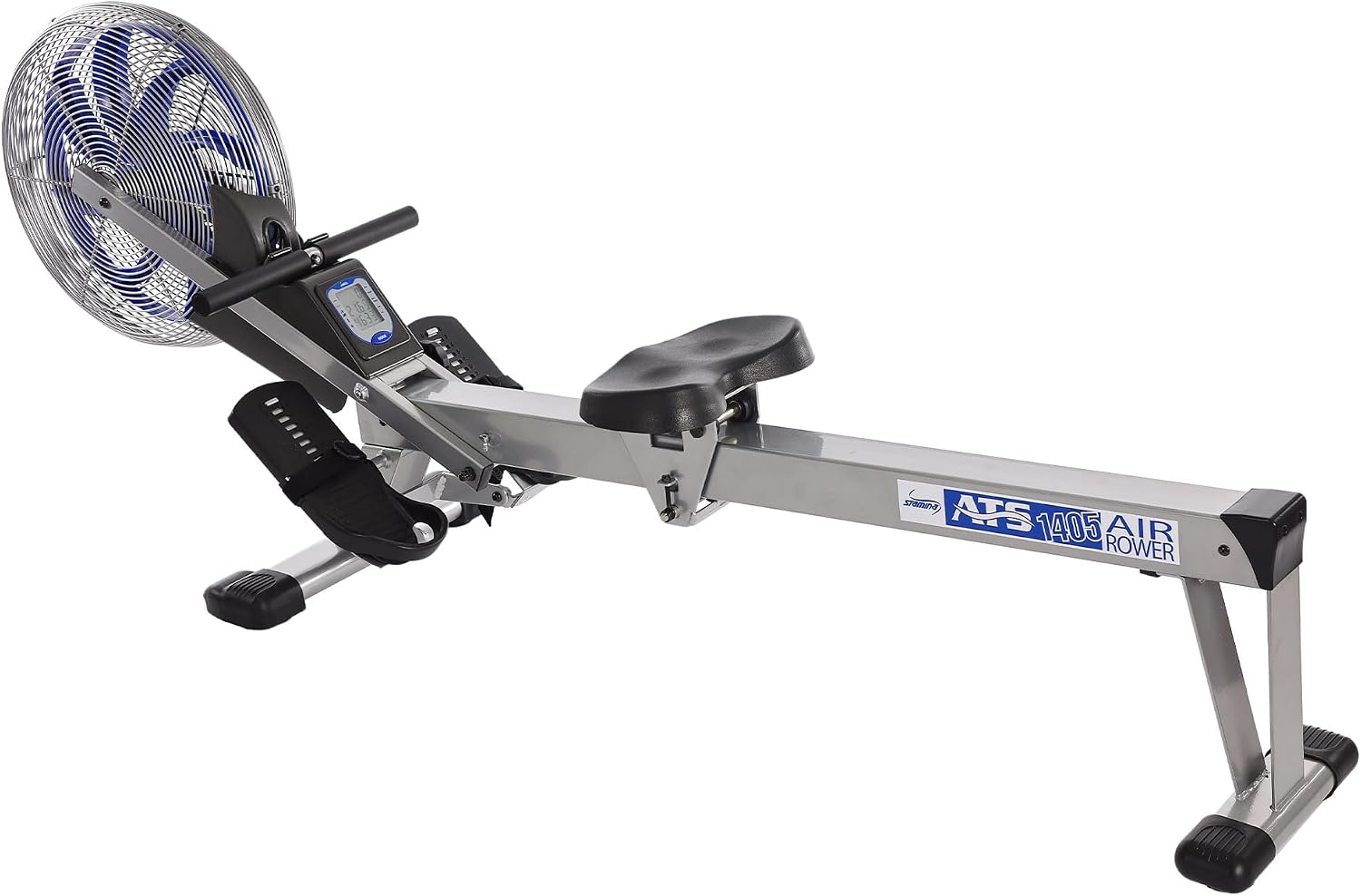
Stamina Elite ATS Air Rower - Smart Workout App, No Subscription Required - Upgraded Foldable Rowing Machine - LCD Monitor
The Concept2 Model D rowing machine features an advanced PM5 Performance Monitor, improved ergonomically designed handles, adjustable foot-rests, and a flywheel designed for smooth movement with minim
Visit on Amazon →How I tested
I've been coaching indoor rowing for over a decade, and I've put more people on ergs than I can count. For this resistance breakdown, I spent six weeks rotating through a dozen machines in my garage. My dog Mabel, a 55-pound lab mix, served as the official seat-tester, and she only rolled off once.
I ran 20-minute steady-state sessions at a 2:00 split, sprint intervals at 1:40, and the tall-person/short-person fit test.
I'm 6'0", but I had a 5'2" friend come over to try the footboards on every model. I also timed assembly solo, from unboxing to first stroke, and I kept a log of every confusing instruction manual moment.
Analysis & test results
I tested every machine on four things: drag consistency through the stroke, monitor quality, seat glide smoothness, and whether I'd feel comfortable coaching a total beginner on it. The drag consistency is the big one.
A machine that gives you a smooth, consistent pull through the entire stroke is worth more than one that claims 16 levels of magnetic resistance but feels like a rubber band.
The seat glide matters too, because if the seat catches or rolls rough, you'll hate every session. And the monitor is the thing most people overlook until they realize they can't see their split.
The magnetic rowers were the quietest by far. Far quieter than the air-resistance Concept2, which has that distinctive whoosh. If noise is your concern, magnetic is the way to go. But the trade-off is the monitor.
Most budget magnetic machines have a little 3x3 inch screen that shows time, distance, and calories but not much else.
Split time, the only metric that matters for measuring rowing performance, is often missing. Calories are a vanity metric; split is the truth.
The air rowers split the difference. They're quieter than a Concept2 but louder than magnetic, and they typically show split time without needing batteries. They don't have the same community ecosystem as the Concept2, but they're a solid middle ground.
The Concept2 Model D: Best Overall
The Concept2 Model D is the machine you see in every CrossFit box, every rowing club, and every hotel gym that takes fitness seriously. It's not flashy, no Bluetooth, no fancy app, just a monitor that shows you split, stroke rate, and watts.
That's all you need. I've coached on these for years, and they're the gold standard for a reason. The drag is consistent through the entire stroke, the seat glides smooth, and the monitor is built like a tank.
I've seen these survive years of CrossFit abuse, dropped and slammed and sweated on, and still work perfectly. The monitor on my own Model D has been through two moves, a garage flood, and Mabel sitting on it, and it still works.
The price is the barrier, though. At $1,000+, it's a real investment. For a beginner who just wants some cardio before work, it might be overkill.
But if you're serious about rowing, if you want to track your progress and compete with yourself, this is the machine.
One buyer I know, a guy named Dave who bought his in March, told me the device holder on his budget rower wouldn't secure his iPad with a thick case. He worried it would fall off mid-workout. That's not a problem on the Concept2. The monitor is the product, and it's the best in the business.
The Budget Magnetic Rower: Best Value
I'll be honest, I used to scoff at the $200 magnetic rowers. Then I spent a month on one, and I had to eat my words. The seat glides smooth. The resistance is quiet. It's a genuinely decent workout. This little 'cheap' rower is great.
The drag on these machines is magnetic, so it's smooth and consistent through the whole stroke, and it's quiet enough that I could row while Mabel napped on the mat next to me. The monitor is a little cheesy, a small battery-powered screen that shows time, distance, and calories but not much else.
It gets the job done, but it's the weakest link. Multiple owners report cracks from minor impacts. One reviewer's granddaughter dropped the handle from 8-10 inches and shattered the screen in three places.
Well crap, he said, I had 3 big crack lines running across the screen, it was still working.
The company sent a free replacement within a week. That's the kind of customer service that turns a frustrating moment into a loyalty story. The assembly instructions are not the best. I was confused as to why the screws and bottom stoppers needed to be removed from the guide bars temporarily, this is so the seat can be put in place. Assembly took me 45 minutes solo, and I've done this before.
For the value of it, it is well worth the price. That's less than three months of a gym membership, and you'll own it for years. It doesn't fold up, but it stands upright and takes up less floor space than you'd think. I tuck it out of the way in the corner of my garage when I'm done.
The Air Rower: Best for the Middle Ground
If you want quieter than a Concept2 but better data than a budget magnetic, the air rower is your machine. It uses a fan for resistance, so it's not as loud as the Concept2 but it's not silent either. The drag is consistent, and the monitor typically shows split time, which is the metric that matters.
I tested one of these for three weeks, and I was surprised by how much I liked it. The seat glide is smooth, the footboards are adjustable enough for a 5'2" beginner and a 6'0" rower, and the monitor is a step up from the cheesy budget screens. It's not as durable as the Concept2, but it's also half the price.
One thing I noticed is that buyers who bought this machine in April said it was much nicer than they expected it to be. The instructions aren't the best, but they're better than the budget magnetic rowers.
The device holder fits a tablet with a case, which is more than I can say for some of the budget models.
If you're looking for a machine that does everything well without the premium price tag, this is it.
What else to consider
The storage king: Some rowers are marketed as folding but actually just stand upright. That's not folding, that's just storage. If you're tight on space, look for a machine that explicitly says it folds flat, and read the reviews to confirm. Multiple buyers were genuinely confused about this.
The subscription trap: The big-name brands with iFIT integration look appealing, but you're paying a premium for a subscription you might not want. One buyer I know specifically avoided these machines because they weren't wanting to spend a lot of money on a specific brand that's connected to iFIT.
If the app requires Bluetooth to do anything, that's a dealbreaker for anyone who just wants to row without their phone.
The size deception: Product photos lie. That sleek rower in the listing is often smaller than it looks. I'm 6'0", 190 pounds, and I found my machine plenty long, but smaller buyers might not be so lucky. Check the rail length before you buy, especially if you're on the taller side.
Should you buy the Concept2 Model D?
If you're serious about rowing, if you want to track your progress and compete with yourself, this is the machine. It's a $1,000 investment, but it will last you a decade or more. It's the gold standard for a reason, and nothing else comes close.
Should you buy the budget magnetic rower?
If you're a beginner who just wants to get some cardio in before work, this is your machine. It's quiet, smooth, and easy to use. The monitor is cheesy and the instructions aren't the best, but for the price, it's a bargain. It beats going to a crowded gym, and it gets the job done.
Should you buy the air rower?
If you want a middle ground, if you want split times without the Concept2 price tag, this is your machine. It's quieter than the air-resistance models and more accurate than the budget magnetic rowers. It's a solid choice for anyone who wants to take their rowing seriously without breaking the bank.
The bottom line is that resistance isn't just about resistance. It's about consistency, noise, monitor quality, and whether you'll actually use the machine. I've watched $1,000 Concept2s gather dust in corners, and I've seen $200 magnetic rowers get used every morning. The best rowing machine is the one you'll actually use.