I learned to row on the water in college, and I have spent the years since teaching people to row indoors, first at a CrossFit box and now at a rowing studio in Seattle. I have coached beginners on the $300 magnetic wobble-fest and on the Concept2 that refuses to die, and I have learned that the machine is roughly 20 percent of the workout. The other 80 percent is whether you actually sit down and pull. But that 20 percent matters more than anyone wants to admit, because a rower that squeaks, wanders across the floor, or lies to you on the monitor becomes a clothes rack by February.
That is the lens I brought to this comparison of home rowing machines. The four machines here span the range from a budget magnetic rower to the WaterRower, and the differences that matter are not the ones on the marketing banner. They are the ones you notice at minute 14 of a steady-state session: whether the resistance holds through the whole stroke, whether the monitor tells you your split instead of your "calories burned," and whether the seat rolls smooth and quiet or announces every stroke to the whole house.
Related: Air vs Magnetic vs Water Rowing Machines Explained
For most homes, the Merach R50 Pro and R60N is the rower I would point a beginner toward, because the backlit monitor gives you the numbers you need to actually train and the magnetic resistance means no tank to treat. If you want the closest thing to real water rowing and you will keep up with the maintenance, the WaterRower is still the machine I keep at home.

WaterRower Rowing Machine with S4 BLE Monitor
Closest feel to on-water rowing, handcrafted wood frame, holds its value
Water tank needs treatment, and the S4 monitor is basic for the money
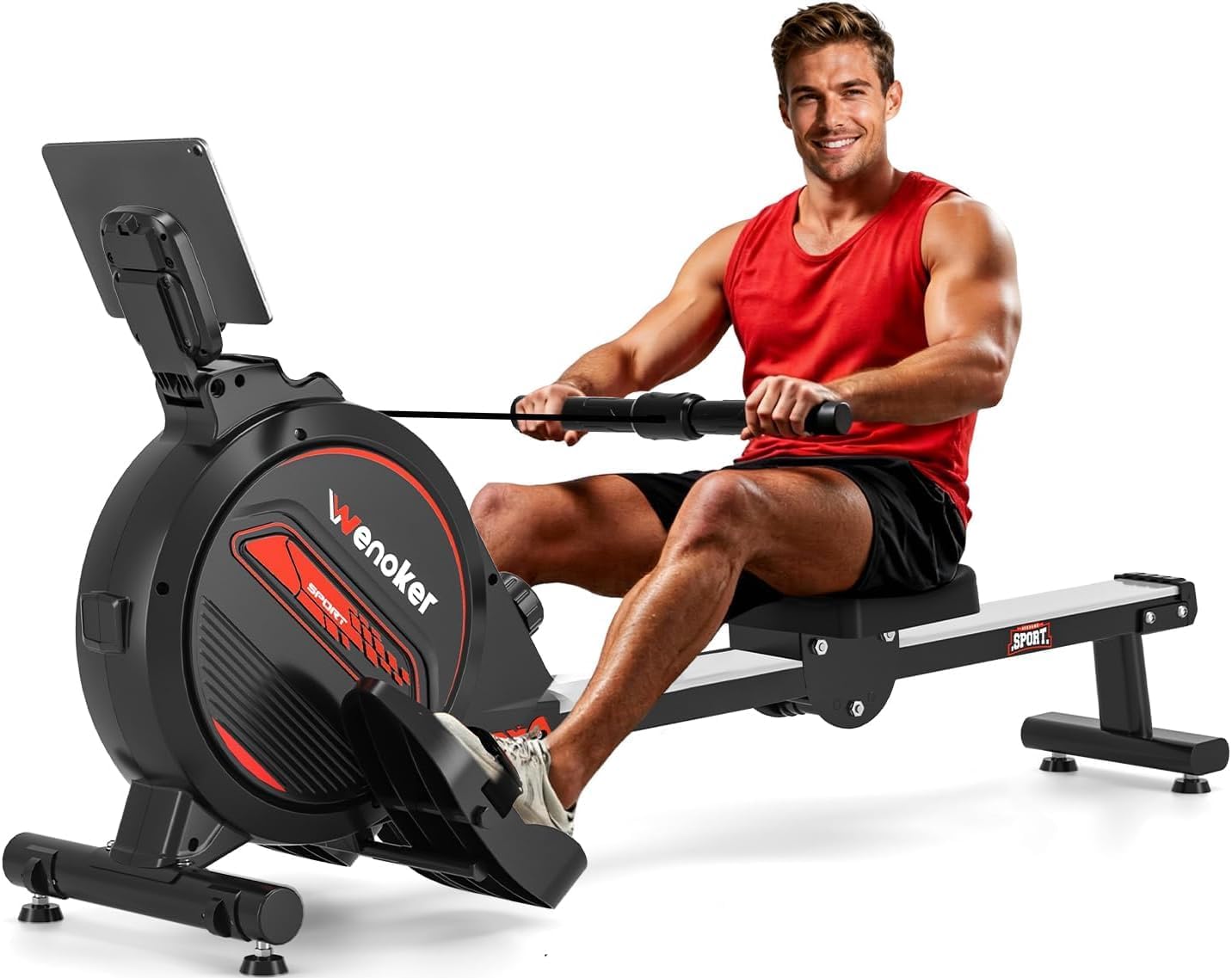
Wenoker Magnetic Rowing Machine for Home,Quiet & Smooth,Full Body Workout
Smooth magnetic pull, simple assembly, resistance is not the noisy part
Monitor is a step behind the Merach, and strong rowers will run out of resistance
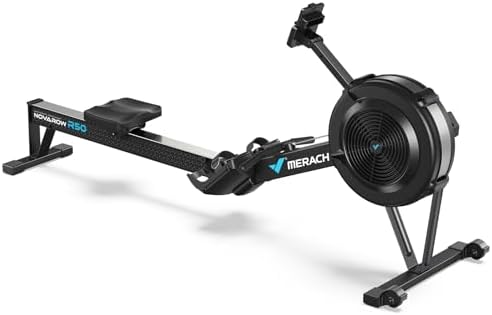
Merach R50 Pro & R60N Rowing Machine Indoor, Backlit Professional Monitor
Backlit monitor is the best training display in this group, comfortable for long sessions
Price sits in a no-man's land between the budget magnetics and the WaterRower
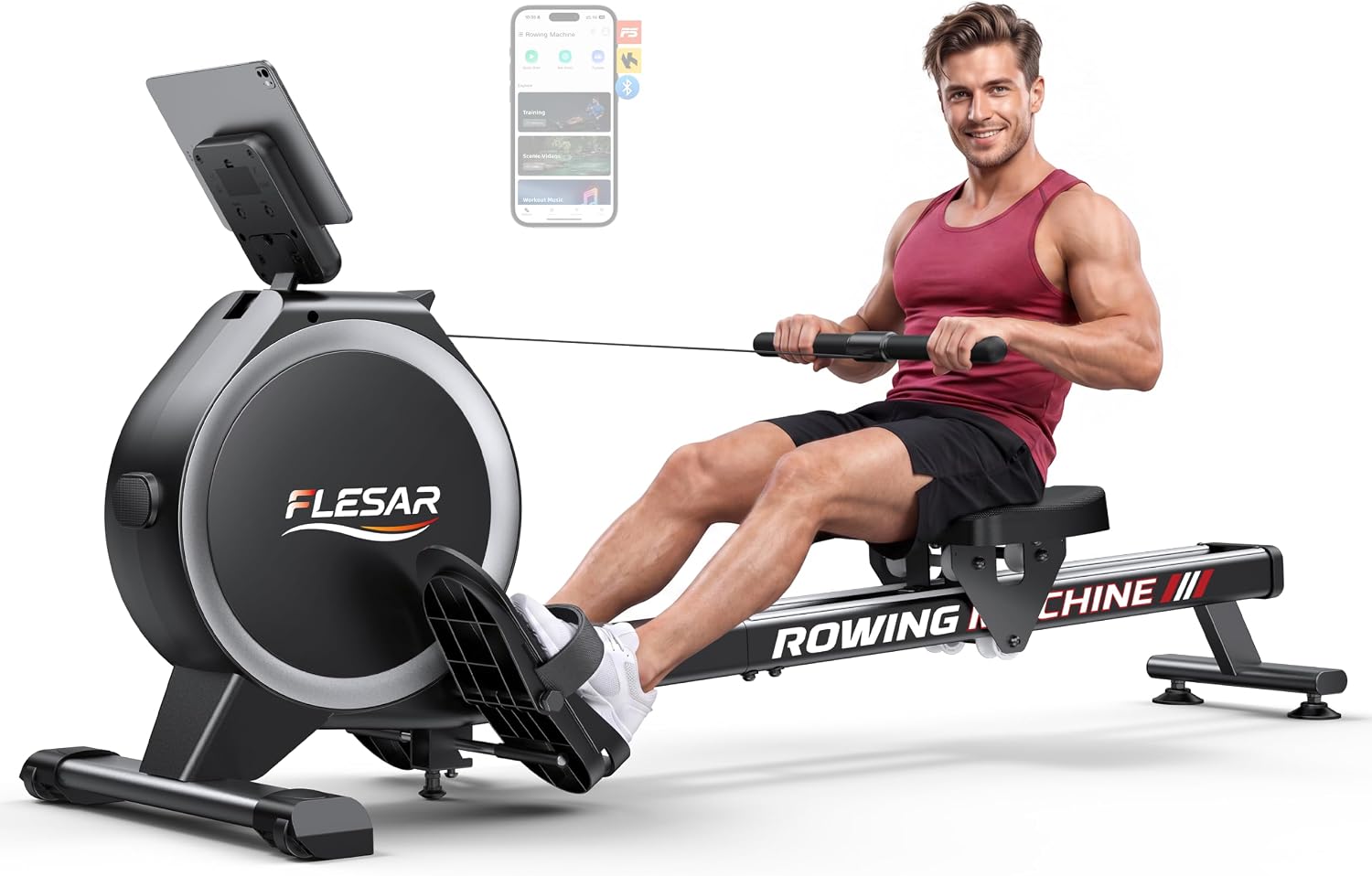
Rowing Machines for Home, Magnetic Rowing Machine with 16 Levels, Rower Machine of 350LBS Weight Capacity & Quiet Resistance, Dual Slide Rail, LED Monitor, App Supported
16 resistance levels, 350 lb capacity, dual slide rail for stability, lowest cost here
LED monitor covers the basics only, and app support is not the same as a training plan
Prices and availability were captured from Amazon Creators API and may change.
How I judge a home rowing machine
My test is boring and repeatable. I row 20 minutes of steady state, then I do sprint intervals, then I hand the machine to the tallest person in the room and the shortest person in the room and watch what breaks first. Four questions decide everything for me.
Does the resistance feel consistent through the whole stroke? A magnetic rower that ramps up in the middle and goes soft at the finish is telling you it was built to a price. A water rower that surges at the catch is telling you the tank is filled wrong.
Does the monitor show split, not just calories? Split is time per 500 meters, and it is the honest pace number. Calories on a rowing monitor are a guess dressed up as data, and I will die on that hill. If a machine only shows time, distance, and calories, you are rowing blind.
Does the seat roll smooth and quiet? This is where budget rowers give themselves away. The resistance on a magnetic machine is nearly silent. The noise you hear is the seat, the rail, and the frame flexing. If the seat clicks on the rail, the machine is telling you something, and you should listen.
Would I coach a beginner on it? If I would not put a new rower on it for their first month, it does not get a recommendation from me, no matter how good the spec sheet looks.
Water resistance vs magnetic resistance
These are two different sports, and I mean that literally.
Water resistance works like a flywheel in a boat. The harder you pull, the more the water pushes back, and the resistance curve is smooth and continuous from the catch to the finish. That is why the WaterRower feels like rowing and why rowers who have been on the water tend to gravitate to it. It also means you can change the feel by changing the water level, and it means the machine is never going to feel "easy" in a way that makes you lazy.
Magnetic resistance is consistent, adjustable in clean steps, and nearly silent at the source. It is also, at the cheap end, a bit dead. My pet peeve is magnetic resistance that feels like stirring soup: no matter how hard you pull, the machine answers with the same flat resistance, and the stroke loses its shape. The 16 level machine and the Wenoker both live in that world, though the 16 level unit gives you enough steps to find a setting that works for intervals.
The honest summary: water for feel, magnetic for quiet and low maintenance. Air, which is not in this group, sits between them and is the standard for a reason.
The WaterRower and the feel question
The WaterRower is the machine I keep at home, and I will be honest about why: it is the only rower in this comparison that makes the catch feel like something. The handcrafted wood frame is also the only one here that looks like furniture instead of gym equipment, which matters in a living room in a way that no spec sheet captures. It is made in the USA, and the resale market treats it accordingly, which is a real financial argument for spending up.
The S4 BLE monitor is where the WaterRower shows its age. It gives you the essentials, and the Bluetooth connection lets you push data to an app, but it is not a training screen in the way the Merach display is. If your goal is to watch split and stroke rate at a glance during intervals, you will be squinting.
Then there is the tank. Water rowers are a maintenance project. You treat the water so it does not go cloudy, you check the level, and you accept that moving the machine means moving water. I have said this before and I will say it again: the WaterRower is the best home rower for aesthetics and feel, and the tank is the price of admission.
Merach R50 Pro and R60N: the monitor argument
If the monitor matters more than the frame, and I think it does, the Merach R50 Pro and R60N is the most interesting machine in this group. The backlit professional monitor is the piece that separates it from every other magnetic rower here. You can read it in a dim room, at a glance, mid-interval, which sounds trivial until you have tried to read a non-backlit LED display while your heart rate is at 170.
The magnetic resistance is smooth and predictable, which is what you want for steady state and for interval work where you are changing effort with your legs rather than with a dial. The trade-off is the price position. At its price it is competing with the bottom of the premium market and against two budget machines that cost a fraction as much. It wins that fight on the display and the build, and it loses it for anyone who just wants to move for 20 minutes three times a week.
Wenoker and the 16 level magnetic: the budget end
The Wenoker Magnetic Rowing Machine for Home is the simplest machine here, and simple is a virtue. Assembly is straightforward, the pull is smooth, and the name promises quiet and smooth. I do not accept quiet claims without a meter, so here is the honest version: on any magnetic rower, the resistance is not the noisy part. The seat and the rail are. A machine like this will be quiet in a way that matters for apartment living, as long as the seat rollers are decent and the rail does not flex.
Visit on Amazon → | Check current Amazon price
The 16 level magnetic rower is the value story of this comparison, and it is also the one I would be most careful about. On paper it checks boxes that matter: 16 levels of resistance gives you real range for intervals, the 350 lb weight capacity means it will hold a big rower, and the dual slide rail is a genuine design advantage over the single-rail budget machines that wobble under a hard pull. A second rail keeps the seat tracking straight when you are tired and your stroke gets sloppy, which is exactly when you need the machine to be stable.
The LED monitor is the weak point. It covers the basics, and app support is nice for logging, but an app is not a training plan and a logged workout is not a coached workout. If you buy this machine, buy it for the rail and the resistance range, and use a phone timer and a target split you set yourself.
Fit: tall rowers, short rowers, and the seat test
This is the test that gets skipped in every review, and it is the one that decides whether you keep the machine. The tall person fit test is about rail length and where the footrests sit relative to your hips. A tall rower on a short rail will run out of travel at the finish and shorten the stroke, which quietly caps how hard they can pull. The short person test is about the catch: if you cannot comfortably reach forward without rounding your lower back, the machine is not for you, and no amount of adjusting the monitor will fix it.
The seat test is the tiebreaker. Roll the seat the full length of the rail with your hand, slowly, before you commit. If it clicks, if it hesitates, if it feels like it is grinding on one side, that is the machine telling you something. Budget rowers usually fail here first, and it is the failure that will drive you the craziest, because it is the one you hear and feel on every single stroke.
The trade-offs nobody puts on the box
Three things to accept before you buy any of these.
First, folding is a lie. Rowers that fold are marketed for storage, and in practice they fold once and never unfold again, or they stay unfolded and the folding mechanism is just flex in the rail. If space is the constraint, buy a machine that stores upright against a wall, not one with a hinge.
Second, subscription rowers are a different purchase. None of the machines here require a monthly fee to function, and that is a feature. If you are drawn to a screen-and-classes machine, price the subscription into the first two years, because that is the real cost.
Third, the monitor is not a coach. Every one of these displays will show you numbers. None of them will tell you that your catch is rushed or that you are pulling with your arms instead of your legs. That part is on you, or on a coach.
A technique note before you buy
The machine is 20 percent of the workout, so here is the other 80 percent in one paragraph. Slow the stroke down and let the flywheel or the water do the work on the recovery. Feel the catch, then drive with your legs before your back opens and before your arms bend. On an air rower, the damper is a feel setting, not a resistance dial, and the drag factor is the number that actually matters. On a magnetic rower, pick a level and leave it, and change your effort with your legs. Watch split, not calories. If you cannot hold a conversation at your steady pace, you are going too hard for steady state, and you will quit in three weeks.
What I would buy
If feel and looks matter most and you will actually treat the water, buy the WaterRower. It is the only machine here I would call a lifelong purchase, and the resale value softens the blow.
If you want to train with numbers in a dim room and you do not want a tank, buy the Merach R50 Pro and R60N. The backlit monitor is the reason, and it is a good reason.
If budget is the constraint and you want the most machine for the least money, the 16 level magnetic rower with the dual slide rail is the one I would put in a beginner's home, with the understanding that you are buying the rail and the resistance range, not the display.
And whichever one you pick, sit on it before you commit, roll the seat down the rail, and listen. The erg does not lie, and neither does a seat that clicks.