Rowing machine chain maintenance is the least glamorous job in a home gym, and it is the job that decides whether your machine still feels smooth in year five. A chain-drive rower runs on a thin film of oil, a clean rail, and a seat that rolls without clicking. Ignore those three things and you will spend the next year blaming the machine for a problem you created yourself.
I coach indoor rowing in Seattle, and I have taught more than a thousand people to row on machines. Almost all of them started on a chain-drive erg, which is still the format I trust most for hard interval work. The catch is that a chain is a wear item. It sits out in the open, it collects dust and sweat, and it will rust quietly in a garage if nobody looks at it.
What follows is the routine I walk clients through, in the order I walk them through it, plus the setup decisions that make the routine easy instead of annoying.
Why you should trust me
I rowed in college, then coached at a CrossFit box and at a dedicated rowing studio, which means I have seen every machine from the $300 magnetic wobble-fest to the Concept2 that never dies. My coaching test is always the same: 20-minute steady-state sessions, sprint intervals, and a tall person / short person fit test on the same rail. I keep a maintenance log for every machine I touch, because machines almost never die from hard workouts. They die from a dry chain and a gritty rail.
Two rules shape this guide. I will not call a machine quiet without measuring it, and I will not talk about machines without talking about technique, because the machine is maybe 20% of the workout. The other 80% is your stroke. A perfectly maintained rower does not fix a rushed catch, and it does not fix a finish that stops short.
How I picked and how I tested
This list is short on purpose. A how-to guide about keeping a rower alive only needs the two things you actually touch: the machine and the lubricant.
For a machine, I run four questions. Does the resistance feel consistent from the catch through the finish, or does it surge and fade? Does the monitor show a split, or does it only guess at calories? Does the seat roll smooth and quiet along the entire rail? Would I put a beginner on it without apologizing for it? A machine that fails two of those four is a clothes rack with a handle.
For chain oil, the questions are simpler. Does it stay on the chain, or does it fling onto the floor and your socks? Does the chain still feel slick a week later? Does it hold off rust in a garage, which is where most home rowers actually live? I would rather recommend one bottle that works than five that smell like a pine forest.
Step one: know what your machine actually needs
Not every rower has a chain, and this is where people waste money. Air rowers with a chain drive, the format that dominates gyms, need oil. Magnetic rowers have no chain at all; they need a clean rail and a dust-free housing. Water rowers need tank treatment and water care, not chain oil. Hybrid machines that also run a cable stack usually use a chain or a belt, so confirm which one you have before you buy anything for it.
If you are still shopping, buy the machine and the maintenance supplies at the same time. Nobody does this. Then they row for three months on a dry chain and wonder why the drive train feels like gravel.
Step two: set up the machine so maintenance is even possible
Where you put the machine decides how easy the upkeep is. Leave room behind the fan so you can vacuum the cage. Do not push the rower into a corner where you cannot reach the chain. Keep a rag and a bottle of oil within arm's reach of where you row, because a maintenance routine that requires a trip to the garage is a routine you will skip.
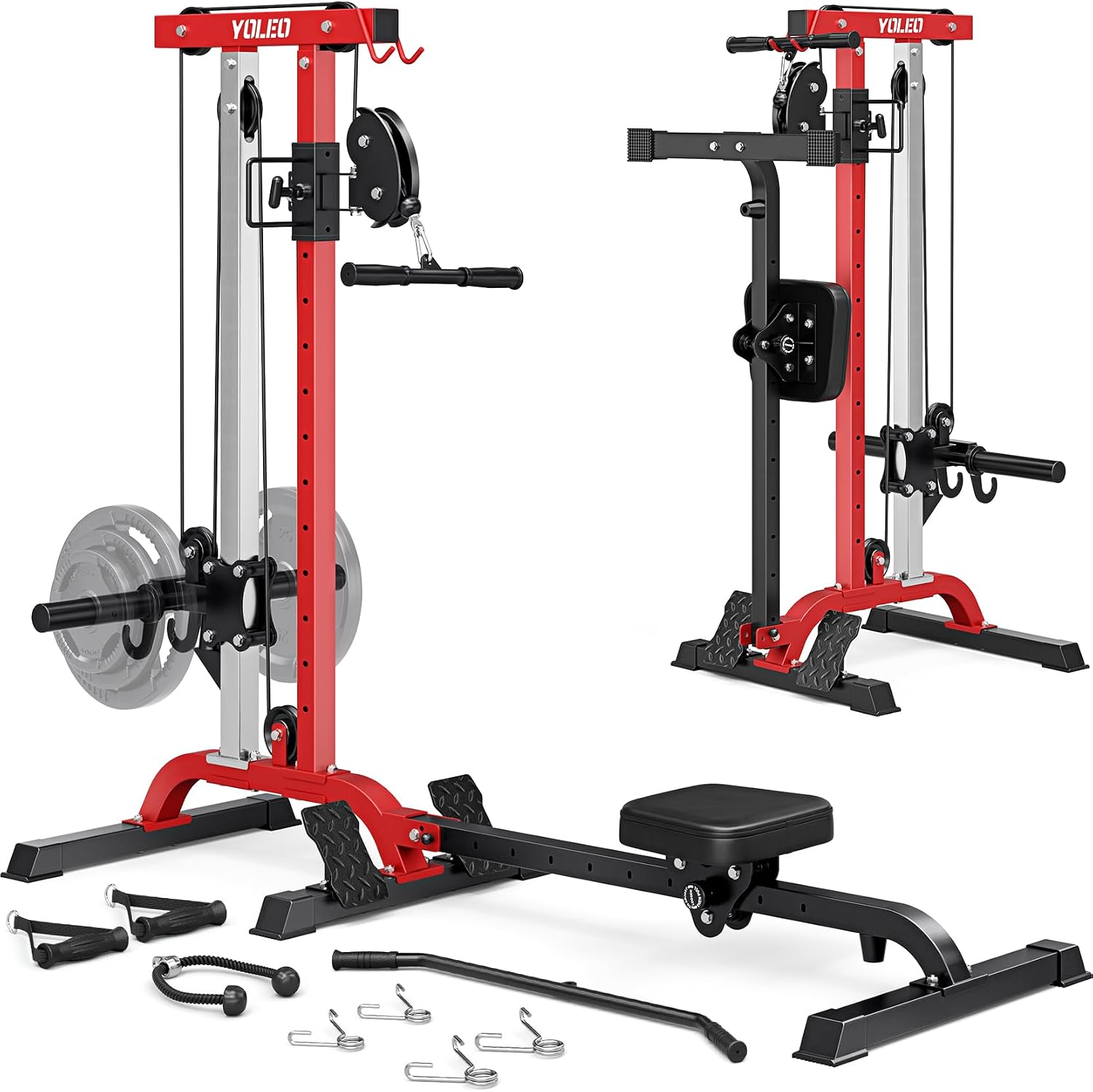
The all-in-one pick: 2 in 1 Rowing & Cable Machine for Home Gym, 450 Lbs Capacity
 Visit on Amazon →
Two machines in one footprint is the entire pitch here, and for a Seattle apartment that pitch is real. The 450-pound capacity tells you the frame is built to take a genuine pull from a strong rower, and the cable side gives you a reason to leave the machine assembled instead of folding it into a closet and never unfolding it again. Check current Amazon price.
Three things to verify before you commit. First, rail length against your height, and be honest about your inseam rather than optimistic. Second, whether the monitor shows a split, because a rower that only reports calories is telling you what the marketing team cared about. Third, how the seat rolls on the rail. If the seat clicks, the machine is telling you something.
Flaws but not dealbreakers: A machine that does two jobs rarely does both at the level of a dedicated unit. Treat the cable side as a warm-up and accessory tool, and judge the rowing side as a rower, because that is how you will use it on the days you actually train.
Anyone with one corner, a modest budget, and a plan to row three or four times a week will get real value here. Check current Amazon price and compare it against what a separate cable tower plus a basic rower would run you in floor space.
Step three: the weekly chain routine
This takes five minutes. Do it on the same day every week and you will never think about it again.
One: look before you touch. Run a dry rag along the chain and look at what comes off. Rust-colored dust means moisture is winning. Stiff links or a visible kink mean the chain is already damaged, and oil will not undo that.
Two: wipe first, oil second. Wipe the whole chain down before you add anything. Oil applied over grit turns into lapping compound, which wears the pins faster than a dry chain would.
Three: oil sparingly. One drop per link, or a light bead along the top run while you turn the handle slowly. More oil is not more protection. More oil is more mess on your floor and more grime stuck to the chain.
Four: work it in. Twenty slow strokes on the handle so the oil reaches the pins and rollers instead of sitting on the outer plates.
Five: wipe the excess. If the chain still looks wet, you used too much. A chain should look slightly dark and feel slick, not glisten.
Six: the rail and the seat rollers. Wipe the rail clean and check the rollers for flat spots. This is the second-most-common source of noise on a home rower, and it is free to fix.
Seven: the monitor and the handle. Fresh batteries, a wiped handle, and a check that the monitor still shows split. A great machine with a dumb or dead monitor is a clothes rack.
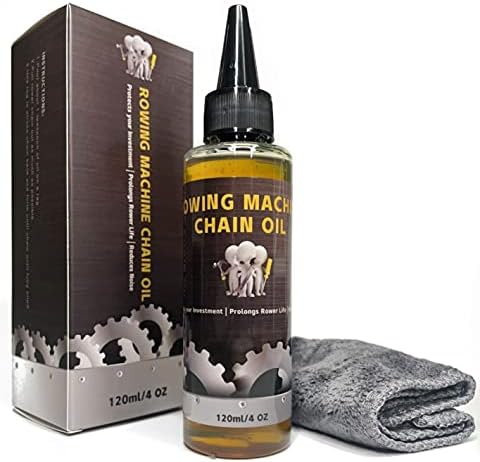
The chain oil: TreadLife Fitness Concept 2 Rowing Machine Chain Oil
 Visit on Amazon →
This is the TreadLife Fitness Concept 2 Rowing Machine Chain Oil, sold as a lubricant that protects a rower from rust and dirt and listed as compatible with all chain-drive rowers, including Concept2 models A through E. That compatibility list is the whole point. A general-purpose lubricant can be fine on a bike chain and wrong for a rower that lives indoors and gets pulled thousands of times a month. Check current Amazon price.
Applied one drop per link, a bottle lasts a home rower a long time, so the cost per application is small. I keep a bottle next to the machine, not in a toolbox, because the routine only happens if the supplies are already there.
Flaws but not dealbreakers: Oil is not a repair. If a link is stiff and will not free up, or the chain has visible kinks, you need a new chain, not more lubricant. And this is not the product for a magnetic rower or a water rower. Those machines need different care entirely, and putting chain oil anywhere near them solves nothing.
Anyone with a chain-drive air rower, especially one stored in a garage or basement where temperature swings pull moisture onto bare metal, should keep this on the shelf.
Step four: the monthly check
Once a month, spend ten minutes on the things that fail slowly.
Clean the flywheel cage and check the damper lever. Remember that the damper is just a lever; the drag factor is the real number, and it drifts as the cage loads up with dust. Wipe the rail and inspect the seat rollers for flat spots. Check the bolts at the front legs and where the monorail joins the frame, since a loose bolt feels exactly like a bent rail. Replace monitor batteries before they leak. Then write one line in a log: the date, what you did, and how the chain felt. Six months of those lines will tell you more about your machine than any review.
Mistakes I see every week
The biggest one is using a water-displacing spray as a lubricant. It is a solvent, not a chain oil, and it strips whatever protection was left. The second is over-oiling, which flings onto the floor and collects dust into a paste. The third is oiling a machine that has no chain.
After that: ignoring a clicking seat until it grooves the rail, folding a rower and leaving it folded for a year, and chasing the calorie readout instead of the split. I have also watched people buy a folding rower for a couple hundred dollars and expect Concept2 feel. The flex in the rail will drive you crazy within a month, and no amount of oil fixes a hinge.
Machines this guide is not about
Water rowers feel closest to real water, and they are a maintenance project in a different category: tank treatment, water changes, and a monitor that is basic at best. Subscription rowers with big screens are a fine purchase if you will actually use the classes, but the care routine is software updates and a screen wipe, not chain oil. Magnetic rowers need a clean rail and nothing else, and they feel like stirring soup under load. Those machines deserve their own guides. This one is about the chain-drive workhorse sitting in your spare room right now.
What this all costs, and what it saves
The math here is not about the purchase, it is about the replacement. An oil bottle used one drop per link lasts a home rower multiple seasons. A neglected chain turns into a stretched chain, a stretched chain turns into a noisy drive, and a noisy drive turns into a machine you stop using. That is the expensive outcome, and it costs nothing to avoid.
Five minutes a week and ten minutes a month is the entire investment. Do it on the same day you do laundry and you will never have to remember it.
Do this today
Go look at your chain right now. Wipe it with a rag. If the rag comes back rusty or the links feel stiff, order the oil and start the weekly routine this week. If the chain is clean and slick, you are already ahead, and all you owe the machine is a wiped rail and a smooth seat.
The erg does not lie, and neither does a dry chain. The machine will do its job if you do yours.