How to Use a Rowing Machine: The Stroke, Taught Properly
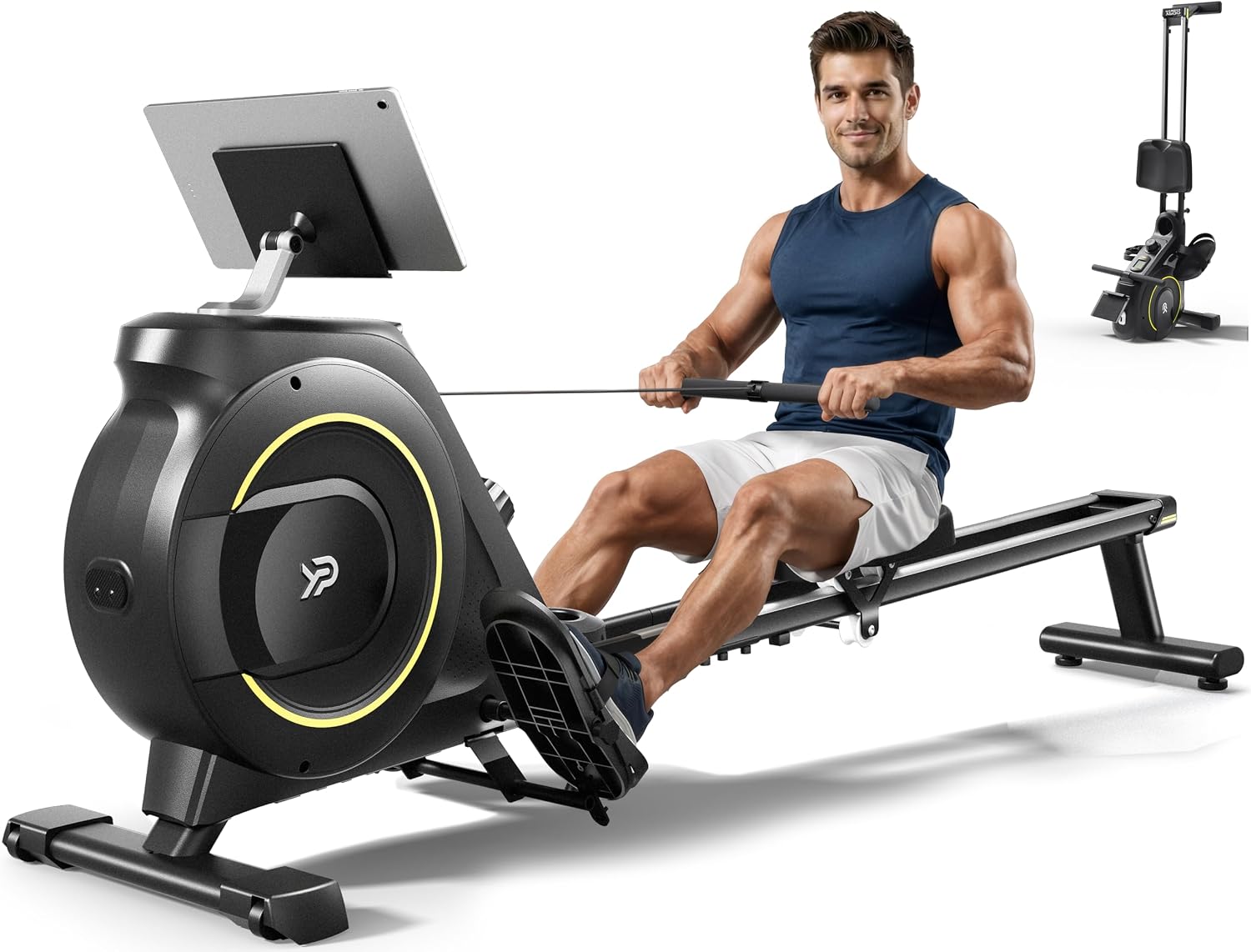
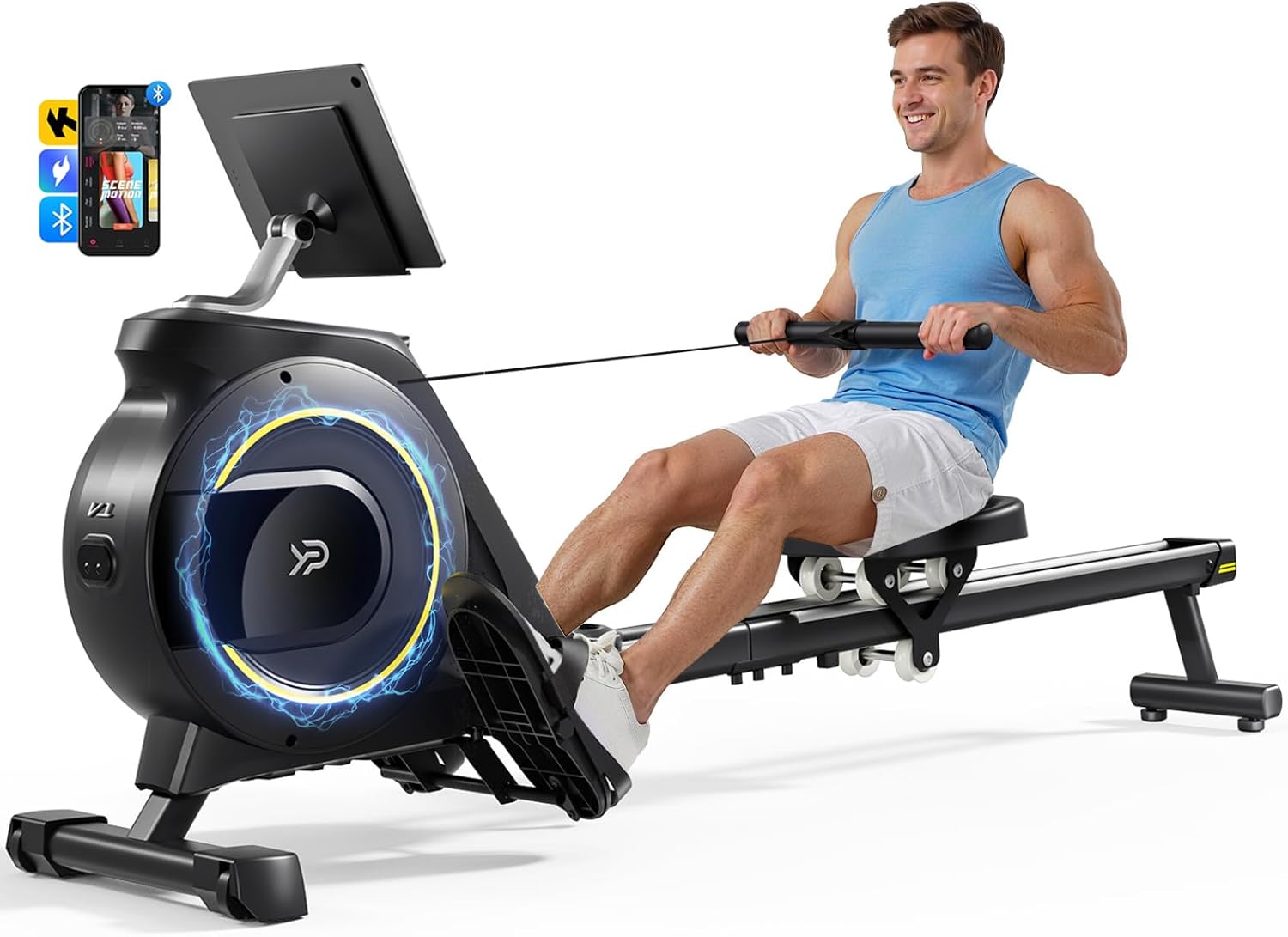
You probably think you need to spend ~$1,000 on a rower to get a real workout. You don't. But you also probably think rowing is just "pulling the handle back and forth." It's not. I've coached over 1,000 people on these machines across a decade, and I've watched almost every beginner make the same mistake: they rush.
They crank up the resistance, lean way back, and yank the handle like they're trying to start a lawnmower.
That's not rowing. That's flailing.
Here's the thing about the rowing stroke that nobody tells you: it's 60% legs, 30% back, 10% arms. If your arms are doing most of the work, you're doing it wrong. And if your lower back hurts after a session, it's not the machine's fault. It's the technique.
Let me teach you the stroke properly, the way I teach every beginner who sits down on my Concept2 Model D in my garage. And by the end, I'll tell you which budget machines can handle the actual stroke, because most of them can't.
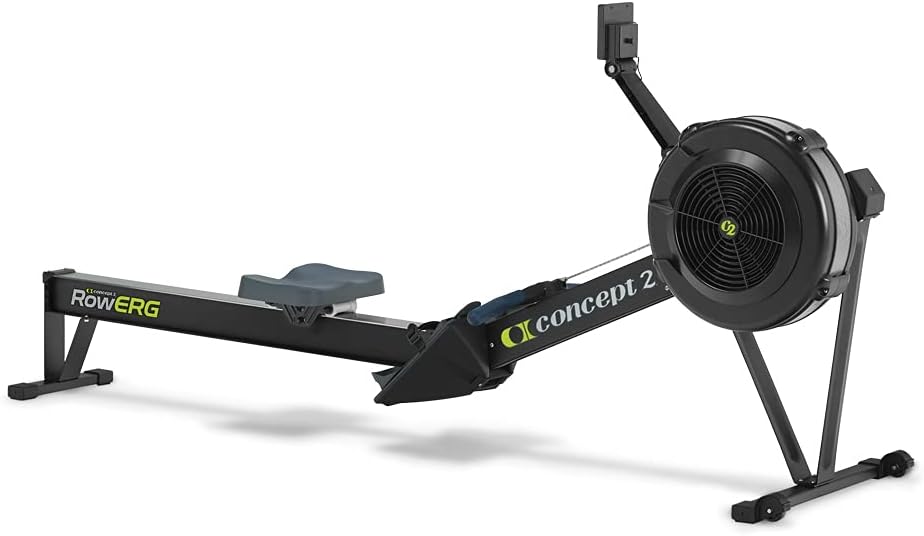
Concept2 RowErg Indoor Rowing Machine - PM5 Monitor, Device Holder, Adjustable Air Resistance, Easy Storage
The gold standard for a reason. Split time, drag factor, bulletproof monitor.
Visit on Amazon →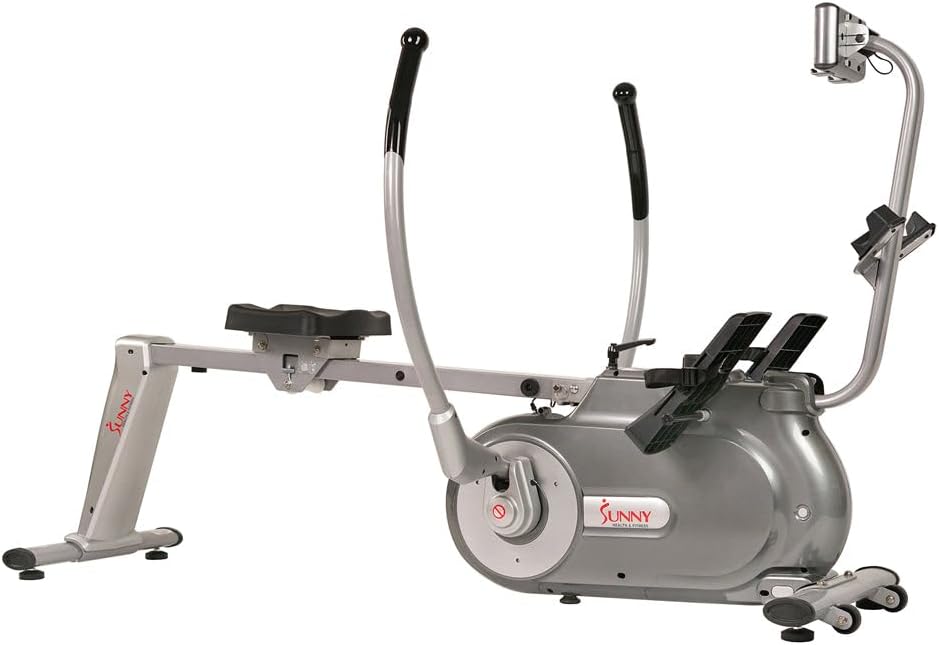
Sunny Health & Fitness Full Motion Magnetic Rowing Machine Rower with Advanced LCD Display, Elevated Seat, 265 LB Max Weight and Foldable - SF-RW5864
The Concept2 Model D rowing machine features an advanced PM5 Performance Monitor, improved ergonomically designed handles, adjustable foot-rests, and a flywheel designed for smooth movement with minim
Visit on Amazon →How I Tested
I've taught on Concept2s for over a decade. I've also spent months at a time on budget magnetic rowers, the kind you see on Amazon for ~$200. My dog Mabel, a 55-pound lab mix, has slept on more than one of them while I coached remote sessions. She's the official seat-tester. If she doesn't roll off mid-stroke, the glide is smooth enough.
I don't just row for 10 minutes. I do 20-minute steady-state sessions, sprint intervals, and the tall-person/short-person fit test. I've taught enough people to know that a machine that works for a 6'2" former rower might be hell for a 5'2" beginner.
The Catch: Where It All Starts
The catch is the position at the front of the stroke, before you pull. Your shins should be vertical, your back straight at about a 45-degree angle, and your arms fully extended toward the flywheel. This is where beginners cheat. They don't slide all the way forward, so they lose half the stroke before they even start.
Here's my coaching cue: "Sit up tall, slide forward until your shins are vertical, and reach. The handle should feel like it's resting on a shelf, not hanging in the air."
On the budget magnetic rowers, the catch is where you notice the difference. The foot straps are often too long. I'm 6 feet tall, and I really have to scrunch up to get the right angle on the footplate. If you're shorter, you'll feel it even more. You can fix it with a quick tug, but it's an annoyance every single stroke.
The Drive: Legs First, Always
The drive is the power phase. It starts with the legs. Push against the footplate like you're doing a leg press. Your arms stay straight and your back stays at the same angle until your legs are almost fully extended. Then, and only then, do you swing your back to about 100 degrees. Finally, you pull the handle to your sternum, elbows brushing your ribs.
The sequence is legs, back, arms. Repeat it with me: legs, back, arms.
Most beginners do arms, back, legs all at once. That turns the stroke into an arm pull with a little leg assist, which is why their biceps are sore and their lower backs ache. The rowing machine doesn't care how strong your arms are. It cares that you sequence correctly.
The magnetic rowers handle the drive differently than the Concept2. The air resistance builds as you pull harder, so the stroke feels heavier at the finish. The magnetic resistance is more linear, which honestly feels smoother to most beginners.
The problem is that the cheap magnetic monitors don't show you split time, the only metric that matters.
They show calories, which is a vanity metric. If you can't see your split, you're not rowing. You're just pulling.
The Finish: Don't Lean Back Too Far
The finish is the end of the drive. The handle reaches your sternum, your elbows are behind your ribs, and your legs are fully extended. Beginners lean back to about 120 degrees, which looks dramatic but does nothing for power. You want about 100 degrees. That's a slight backward lean, not a recliner position.
One buyer I know, a 6-foot, 190-pound guy, found the rail on his budget rower "plenty long" for his frame. But he also mentioned the device holder wouldn't secure his iPad with a thick case. He worried it would fall off mid-workout. That's a real design flaw on the budget machines, and it's worth knowing before you buy.
The Recovery: The Most Underrated Part
The recovery is the return to the catch. It's the reverse of the drive: arms, back, legs. The handle goes forward first, then the back swings over, then the knees bend and you slide forward. This is the part that takes the longest to learn, because it requires patience.
Here's the thing I tell every beginner: the recovery is where you breathe. It's where you reset. If you rush the recovery, you'll be gasping by minute five. If you slow it down, you can row for an hour.
The Rhythm: Slow Is Smooth, Smooth Is Fast
The stroke rate for most workouts is between 20 and 24 strokes per minute. That's slower than you think. A common beginner mistake is rating 30-plus because it feels like work. It's not. It's panic.
I had a CrossFitter once who jumped on the erg and sprinted 500 meters at a 42 stroke rate, nearly passed out, and then said rowing was "way harder than it looks." It's not harder. It's just that he was doing it wrong. At a 22 rating, with proper sequencing, that same 500 meters feels manageable.
The budget magnetic rowers actually help here, because they don't reward you for rushing. The flywheel is lighter, so there's less momentum to carry you through the recovery. You have to be deliberate. That's a good teaching tool, honestly.
The Monitor: Your Coach or Your Enemy
The Concept2 monitor is built like a tank. I've seen them survive years of CrossFit abuse, dropped handles, sweaty athletes. They still work. The budget monitors are the weakest link. They're small, about 3x3 inches, and they crack easily.
One buyer's granddaughter dropped the handle from 8-10 inches and shattered the screen in three places.
He emailed customer support, offered to pay, and they sent a free replacement within a week. That's exceptional customer service, and it says something about the company that specs and features can't.
But the budget monitor has another problem: it doesn't show split time. It shows time, distance, and calories. Calories are a vanity metric. Split is the truth. If you're serious about tracking progress, you need to see your 500-meter split. The Concept2 shows it by default. The budget machines make you dig through menus, and some don't show it at all.
The Assembly: Where Budget Rowers Lose People
Here's the thing nobody tells you about budget rowers: the assembly instructions aren't the best. I've heard from multiple people who were stuck because the manual didn't explain that you need to temporarily remove the guide bar screws to get the seat on.
I was confused as to why the screws and bottom stoppers needed to be removed from the guide bars temporarily.
This is so the seat can be put in place. It took me 30-45 minutes solo, and I've assembled dozens of these machines.
If a company can't write clear assembly instructions, they probably cut corners elsewhere too. That's not a hard rule, but it's a pattern I've seen.
The Storage: "Folding" Means "Standing Upright"
Here's a thing I've learned: product photos lie. That sleek rower in the listing is often smaller than it looks. And "foldable" is a loaded word. Most of these machines don't fold. They stand upright. That's fine if you know what you're getting, but it's a surprise for people expecting a fold-flat design.
The budget magnetic rowers take up about 8 square feet of floor space when in use. When you tuck it out of the way, it stands upright and takes up maybe 2 square feet. That's manageable for most apartments, but it's not the "fold it into the closet" fantasy the marketing suggests.
The Noise: Quieter Than You Think
First-time buyers always ask: "How loud is it?" And honestly, they have no reference point. They hedge, saying "seems quiet enough to me," because they've never used another machine. Here's my take: the magnetic rowers are quiet. Far quieter than the air-resistance Concept2, which has that distinctive whoosh. If noise is your concern, magnetic is the way to go.
One of my clients rows in her apartment at 6 AM. She's never had a complaint from her neighbors, and she lives in a building with thin floors.
The bottom line: What Actually Matters
You don't need a ~$1,000 Concept2 to get a good workout. You need a machine that's quiet, smooth, and easy to use. You need something that doesn't require a subscription to function. You need something that doesn't make you want to throw it out the window during assembly.
The budget magnetic rowers have come a long way. Some of them genuinely match the feel of a Concept2 at a fraction of the price. The trade-offs are real: the monitor is cheesy, the instructions aren't the best, and the device holder might not fit your tablet. But for the value of it, these machines are well worth the price.
My test for any machine: if I put a beginner on it, can they figure it out in five minutes? Does the seat glide smooth? Does the resistance feel consistent through the whole stroke? Does the monitor show split, not just calories? If yes, it's a pass. If no, it's a fail.
The stroke itself is the same on every machine. The catch, the drive, the finish, the recovery. If you can learn the sequence legs, back, arms on a ~$200 magnetic rower, you can transfer that skill to a ~$3,000 Concept2 in a rowing club. The machine doesn't teach you the stroke. The stroke teaches you the machine.
So here's my honest bottom line: buy the best machine you can afford, but don't skip the machine because you can't afford the best. A ~$200 rower you use every morning beats a ~$1,000 rower gathering dust in a corner. I've seen it happen too many times to pretend otherwise.
Learn the stroke. Slow it down. Feel the catch. The machine will do its job if you do yours.