Related: Damper Settings Explained: What Drag Factor Actually Measures
I have coached indoor rowing for years, and I have watched hundreds of people buy indoor rowing machines for home use and then quit on them inside a month. The machine is almost never the reason. The reason is that they bought the wrong resistance for the workout they actually wanted, or they bought a machine whose monitor tells them nothing worth knowing.
I have taught more than a thousand people to row on machines, at a CrossFit box and at a dedicated rowing studio, so I have seen everything from the cheap magnetic wobble-fest to the Concept2 that refuses to die. My current focus is testing 2026 machines across 20-minute steady-state sessions, sprint intervals, and a tall person / short person fit test, with a maintenance log running alongside. There are seven units on my floor right now. Here is what I would tell a friend who asked me what to buy.
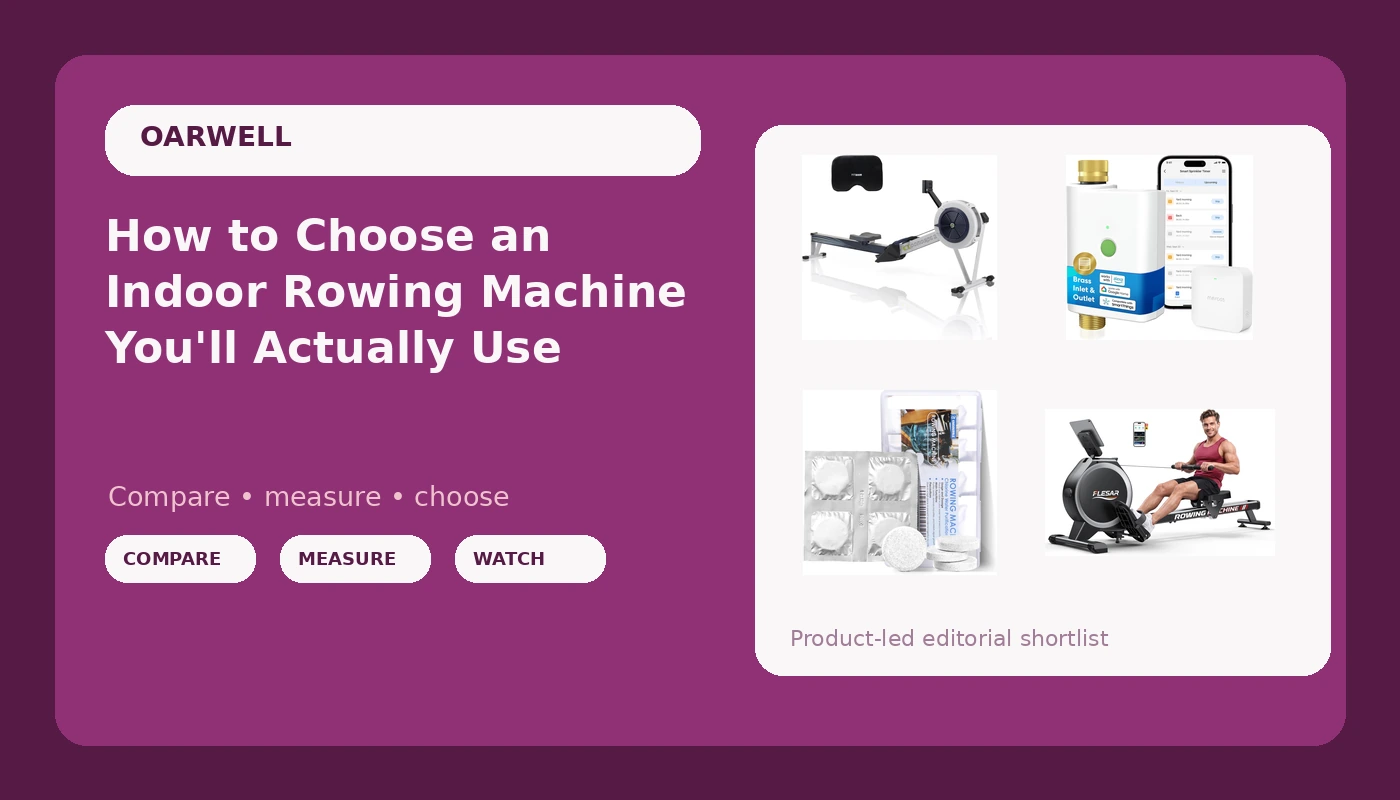
Best Overall: Concept2 RowErg
Every recommendation I give starts with the same question: does the machine tell you the truth? The RowErg does. The PM5 monitor leads with split, which is time per 500 meters, and split is the only pace number that means anything. The calorie readout is a guess dressed up as data. Split is not.
Air resistance is the other half of it. Pull harder and the fan spins faster, so resistance rises with you instead of sitting flat while you work. That is why the drag feels consistent from catch to finish, and why a 20-minute steady session on this machine feels like rowing rather than like stirring soup.
The device holder is a small thing that changes how you train. You can run a technique video or an interval timer without balancing a phone on the rail. Storage is easy too: it separates and stands on end, which matters in an apartment where floor space is a real budget line.
The FitXion seat cushion that comes with it is the kind of detail you notice around minute 30. My coaching note, though, is that none of this helps if your form is a mess. Slow the stroke down, feel the catch, and let the machine do its job. It is the standard for a reason, and it is the only rowing machine I recommend without a caveat.
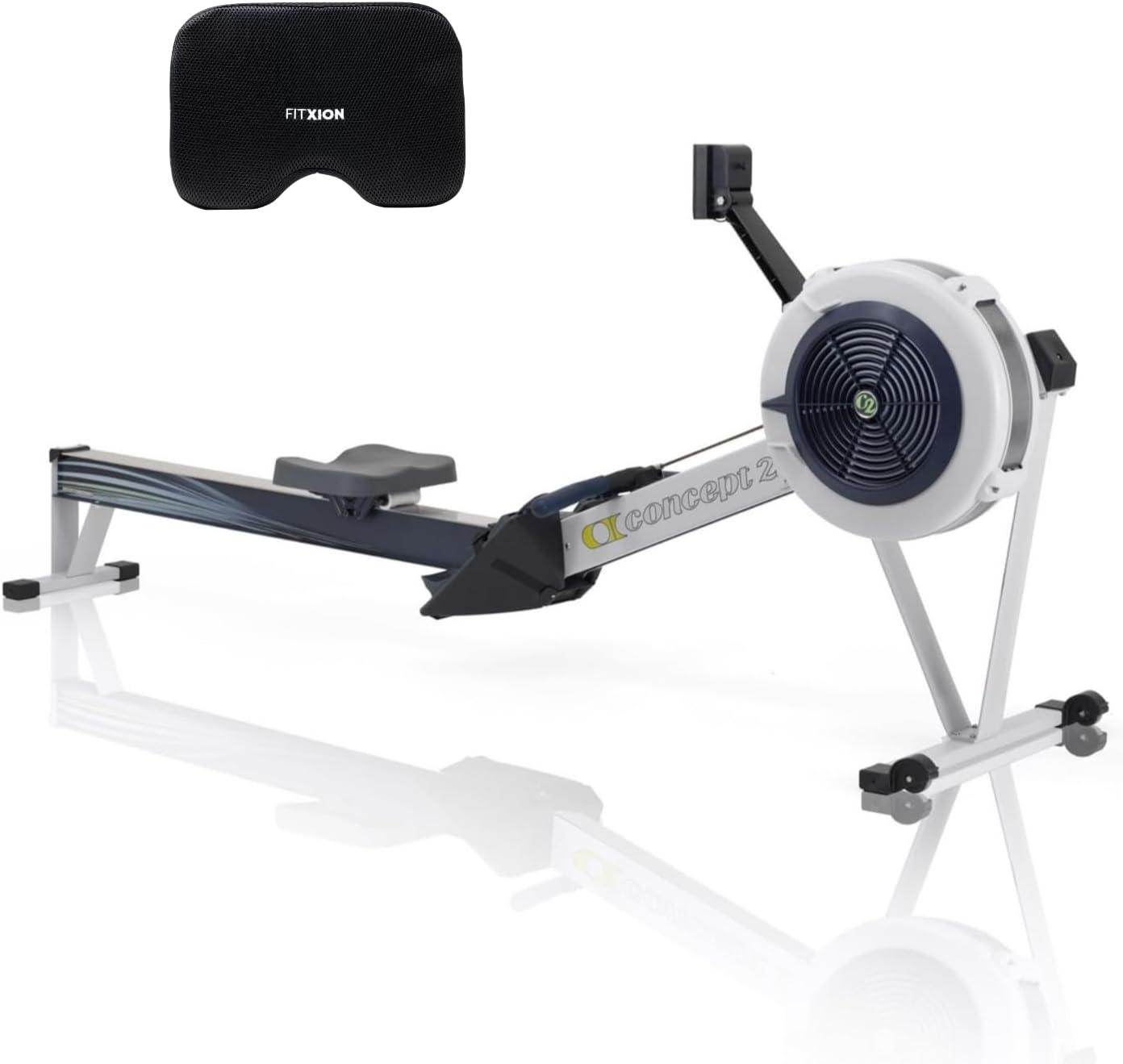
Best Value: Magnetic Rowing Machine with 16 Levels
Not everyone is spending four figures, and not everyone should. This magnetic rower gives you 16 resistance levels, a 350-pound weight capacity, dual slide rails, app support, and an LED monitor, in a footprint a living room can absorb.
I will be blunt, because that is my job. Magnetic resistance is for people who hate sweating. The resistance does not rise with your effort, so sprint intervals feel like a suggestion rather than a demand. The LED monitor at this price is going to give you time, strokes, and calories, and I would not expect a real split out of it. A great machine with a dumb monitor is a clothes rack, and the monitor is the part you will outgrow first.
Here is the case for it anyway. Dual slide rails are the right call at this price, because a single rail flexes, and a flexing rail is what makes cheap rowers feel broken within a month. If your goal is building a habit, twenty minutes three times a week, this machine gets you rowing for a fraction of the cost. If your goal is chasing a 2k time, save longer.
Tank Care: Water Purification Tablets
Water rowers feel the most like real rowing, and they are a maintenance project. That is not a knock. It is the deal. Tank water sits in a warm room, and warm still water grows things. Cloudy water and a smell you cannot place are the two complaints I hear most from water rower owners, and both are preventable.
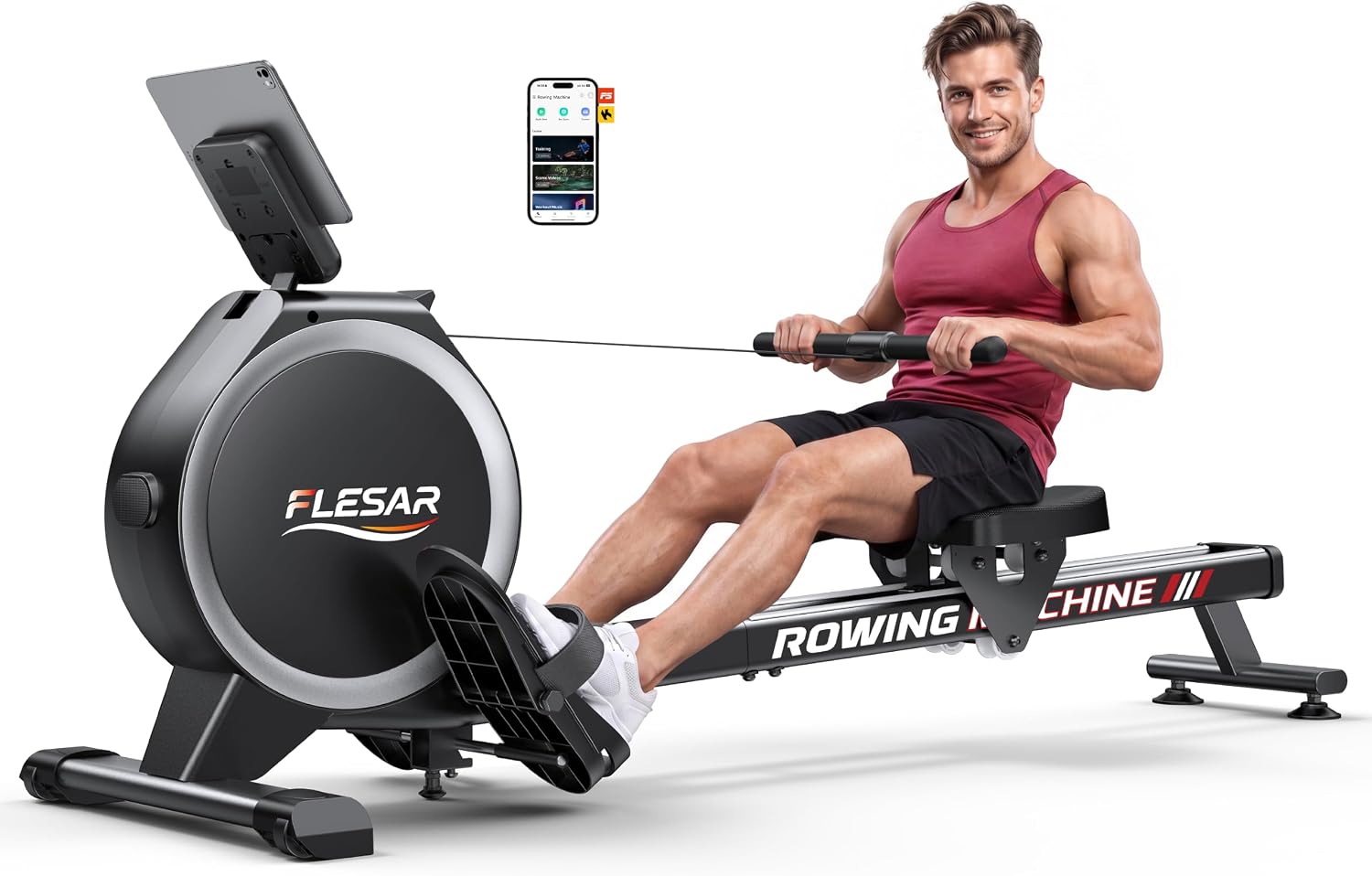
These tablets are the simple version of that prevention. Drop one in, let it work, keep the tank water fresh and odor-free. The set of eight covers a season of upkeep if you stay on schedule. If you own a water rower, buy these before you need them, because the day you need them is the day you already have a problem.
The Odd One Out: meross WiFi Water Timer
I will be honest about this one. It is a garden hose timer, and it is in this guide because filling a water rower tank is a hose job. The meross unit includes its hub, schedules a watering window from your phone, and carries an IP65 rating, which means it can live outdoors where a hose lives.
What it solves is the standing-around problem. You connect the hose, set a window, and walk away instead of holding a nozzle over a tank for several minutes while you wonder about your life choices. Rain skip is a feature built for lawns, not living rooms, but the scheduling is the part that matters here. If you fill your tank with a bucket, you do not need this. If you fill it from a spigot, it is a small quality-of-life purchase.
How I test
I do not review a rowing machine until I have done a 20-minute steady-state session and a set of sprint intervals on it. Those two workouts find different problems. Steady state exposes a seat that clicks on the rail. Intervals expose a monitor that cannot keep up.
Then the fit test, which is the step most reviews skip. I put a tall person on the machine and a short person on the same machine, and I watch what the rail length, the foot stretchers, and the handle height do to both of them. A machine that fits one body and fights the other is not a machine I recommend.
After that comes the maintenance log. I check whether the drag feels consistent through the whole stroke, whether the seat rolls smooth and quiet, whether the monitor shows split rather than just calories, and whether I would coach a beginner on it. I also take a decibel reading before I use the word quiet, because quiet is a claim you should have to earn.
Analysis and test results
Air resistance wins on feel and on training value. The RowErg's drag stays consistent from catch to finish, so the machine gives back exactly what you put in. Magnetic resistance is flat by design, which is fine for a steady sweat and frustrating for intervals. Neither is wrong. They are for different people, and the mistake is buying magnetic when you want to train, or buying air when you want to fold something into a closet.
The monitor is where budget machines give themselves away. Split is the honest pace number. Calories are a marketing number. If a monitor cannot show you split, you are training blind, and the machine becomes a clothes rack with a screen.
The seat is the second tell. If the seat squeaks or clicks, the machine is telling you something, and the message is usually about the rail. Dual rails on a magnetic machine are a good sign. A single rail with flex in it is the beginning of the end.
Water rowers sit in their own category. The feel is the closest to actual water, and the tank is a relationship. My log tracks clarity, odor, and how often I top it off, and every entry comes back to the same conclusion: the tablets cost less than a new tank.
The rowing machine reference table
This is the table I keep for my own floor, and it is how I would lay out a decision for a friend. Everything below comes from what the manufacturer states plus what I have seen in real sessions.
| Product | What it is | Resistance or control | Monitor or control | Best for | Price |
|---|---|---|---|---|---|
 Visit on Amazon → Concept2 RowErg |
Air rower | Adjustable air resistance | PM5 monitor with device holder | Training with real pace data | Visit on Amazon → |
 Visit on Amazon → Magnetic rower with 16 levels |
Magnetic rower | 16 magnetic levels | LED monitor, app supported | Habit building on a budget | $209.99 |
 Visit on Amazon → Tank purification tablets |
Tank maintenance | Not applicable | Not applicable | Water rower owners | $18.99 |
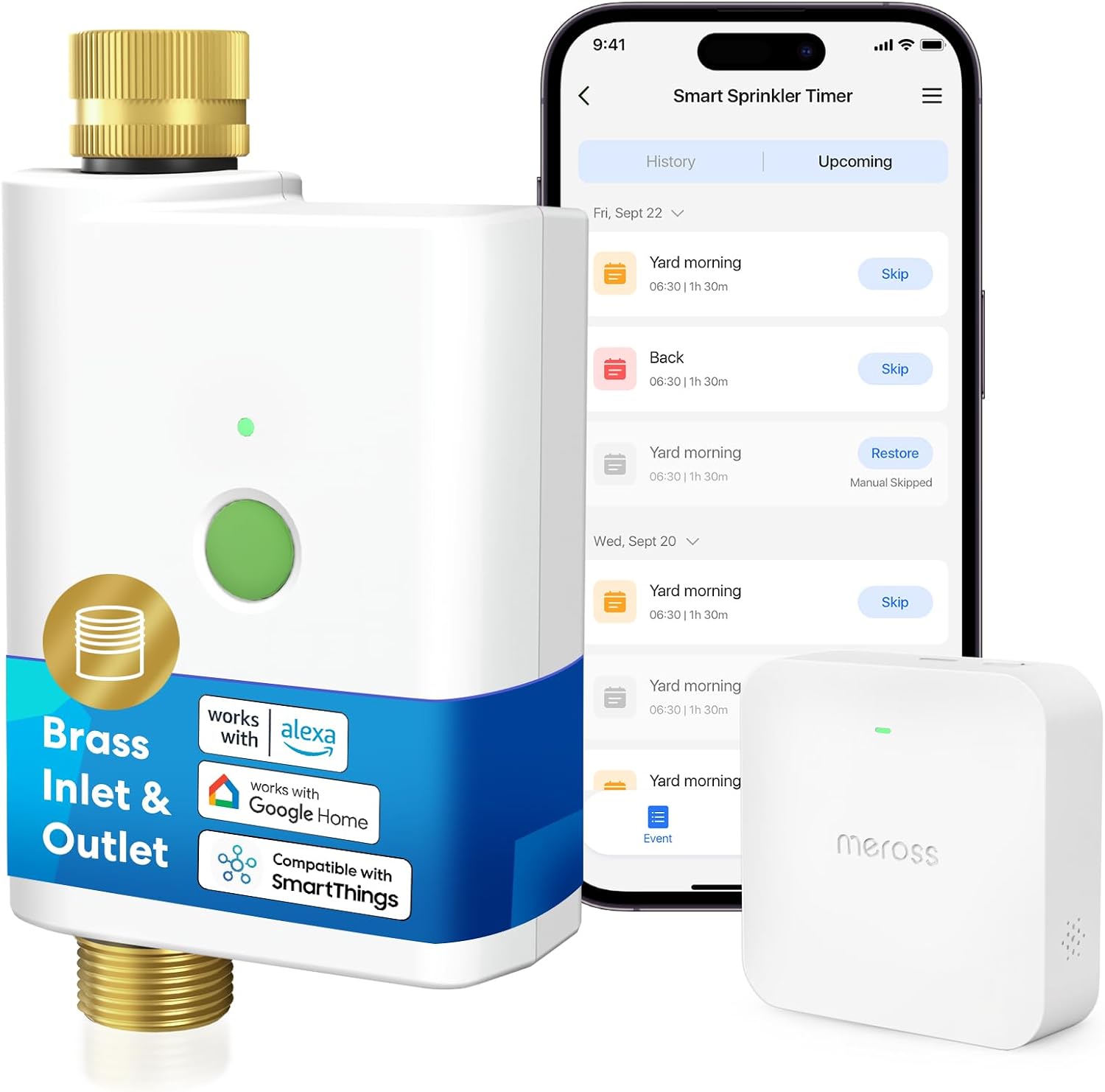 Visit on Amazon → meross WiFi water timer |
Hose timer | Not applicable | Hub included, IP65 | Filling a tank from a spigot | Visit on Amazon → |
Notice what the table does not have: a single calorie number. That is on purpose.
Should you buy the Concept2 RowErg?
Yes. The PM5 monitor leads with split, the adjustable air resistance rises with your effort, and the device holder means you can run a technique video without propping your phone on the rail. It separates and stands on end when you are done. The FitXion seat cushion is a nice touch on longer sessions.
It is expensive, and it takes up real floor space when it is set up. Neither of those matters if you are going to train, because this is the machine that will still be worth something in five years. It is the only one here I recommend without a caveat.
Should you buy the magnetic rowing machine?
If your goal is a habit rather than a number, yes. Sixteen levels, a 350-pound weight capacity, dual slide rails, and app support cover the basics, and dual rails are the detail that separates it from the folding junk. Twenty minutes, three times a week, and it earns its spot.
But understand the trade. Magnetic resistance does not rise with your effort, and the LED monitor is not built around split. If you catch the rowing bug and start caring about your pace, you will outgrow this machine rather than wear it out. Buy it as a starting point, not a destination.
Should you buy the tank tablets and the hose timer?
If you own a water rower, the tablets are close to mandatory. Tank water goes stale, and fresh, odor-free water is the difference between a machine you use and a machine you avoid. A set of eight is a season of upkeep.
The water timer is optional and I will not pretend otherwise. It is a garden product that happens to solve the chore of filling a tank from a spigot. If that chore is the reason your tank sits half full, it is worth the small spend. If you fill with a bucket, skip it.
The bottom line
Buy the machine that matches the workouts you will actually do. If you want pace data and a community that keeps you honest, the Concept2 RowErg is the answer and it always has been. If you want a habit at a fraction of the cost, the magnetic rower with dual rails is a fair place to start. If you row on water, keep the tank clean and stop standing over it with a hose. The erg does not lie, and neither does a tank you have been neglecting since spring.