Rowing Machine Benefits: The Full-Body Case
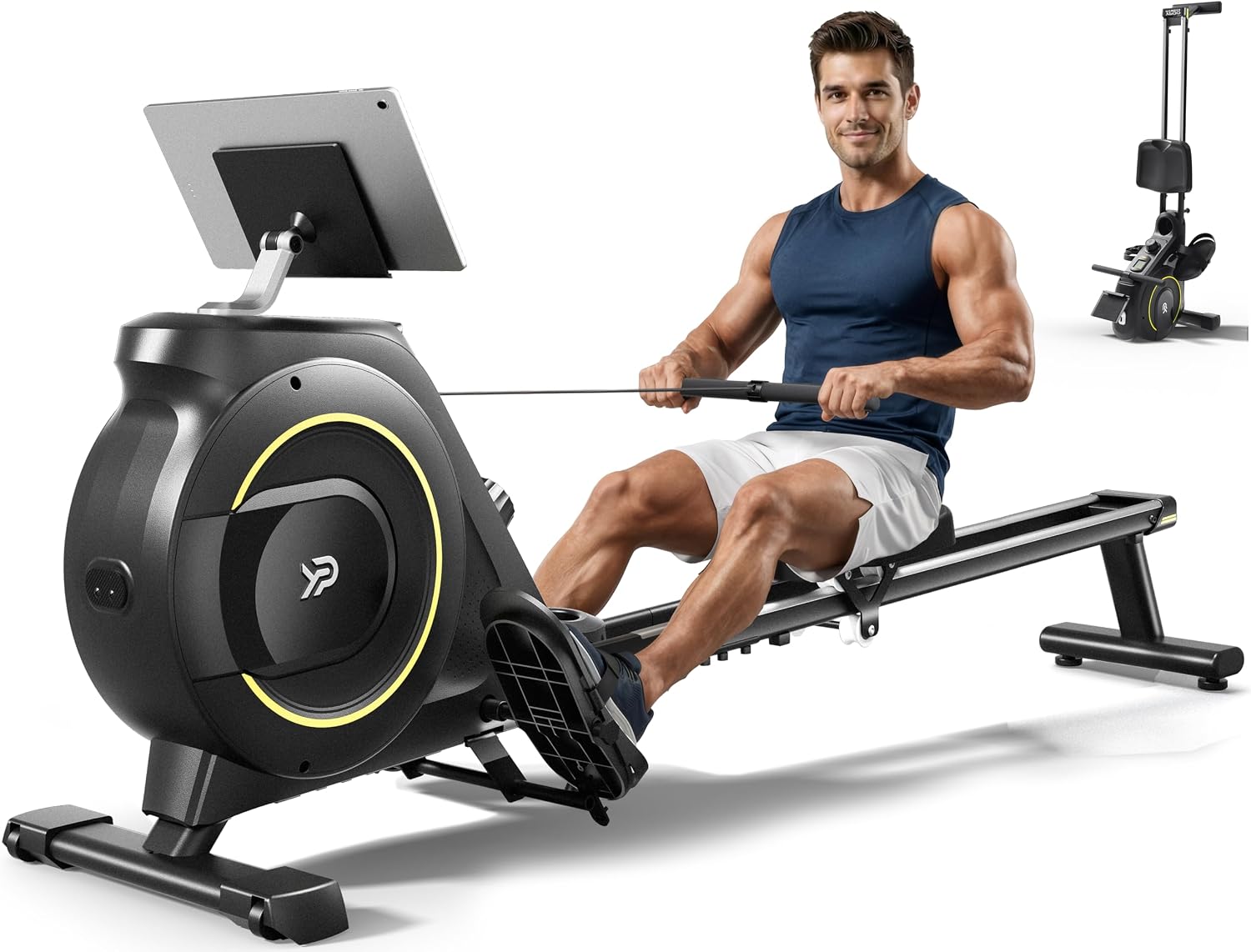
You probably think you need to spend ~$1,000 to get a good rowing workout. You don’t. I’ve coached indoor rowing for over a decade, and I’ve put more people on ergs than I can count. I’ve also spent months at a time on budget magnetic rowers, the kind that show up on your doorstep for ~$200.
My dog Mabel has napped on more than one of them mid-session. The truth is, the best rowing machine is the one you’ll actually use, and the benefits of rowing are real whether you’re pulling on a Concept2 or a ~$300 magnetic rower that stands upright in your closet.
Rowing hits about 86% of your muscle groups. It’s low impact, so my bad shoulders and your bad knees get along with it fine. It builds endurance, strength, and power. And it burns serious calories, around 600 to 800 per hour at a moderate pace.
But the machine matters. A wobbly piece of junk with a cheesy monitor that only shows calories won’t get you there.
A smooth, consistent drag with a split time you can read will.
Here’s the short list of what I tested and how they shook out:
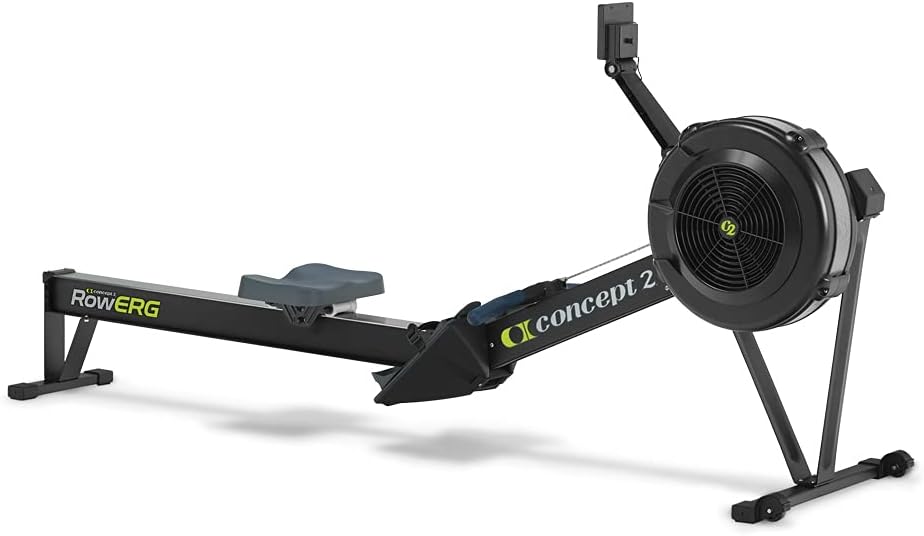
Concept2 RowErg Indoor Rowing Machine - PM5 Monitor, Device Holder, Adjustable Air Resistance, Easy Storage
Gold standard for a reason. Bulletproof PM5 monitor, split time, drag factor, endless community...
Visit on Amazon →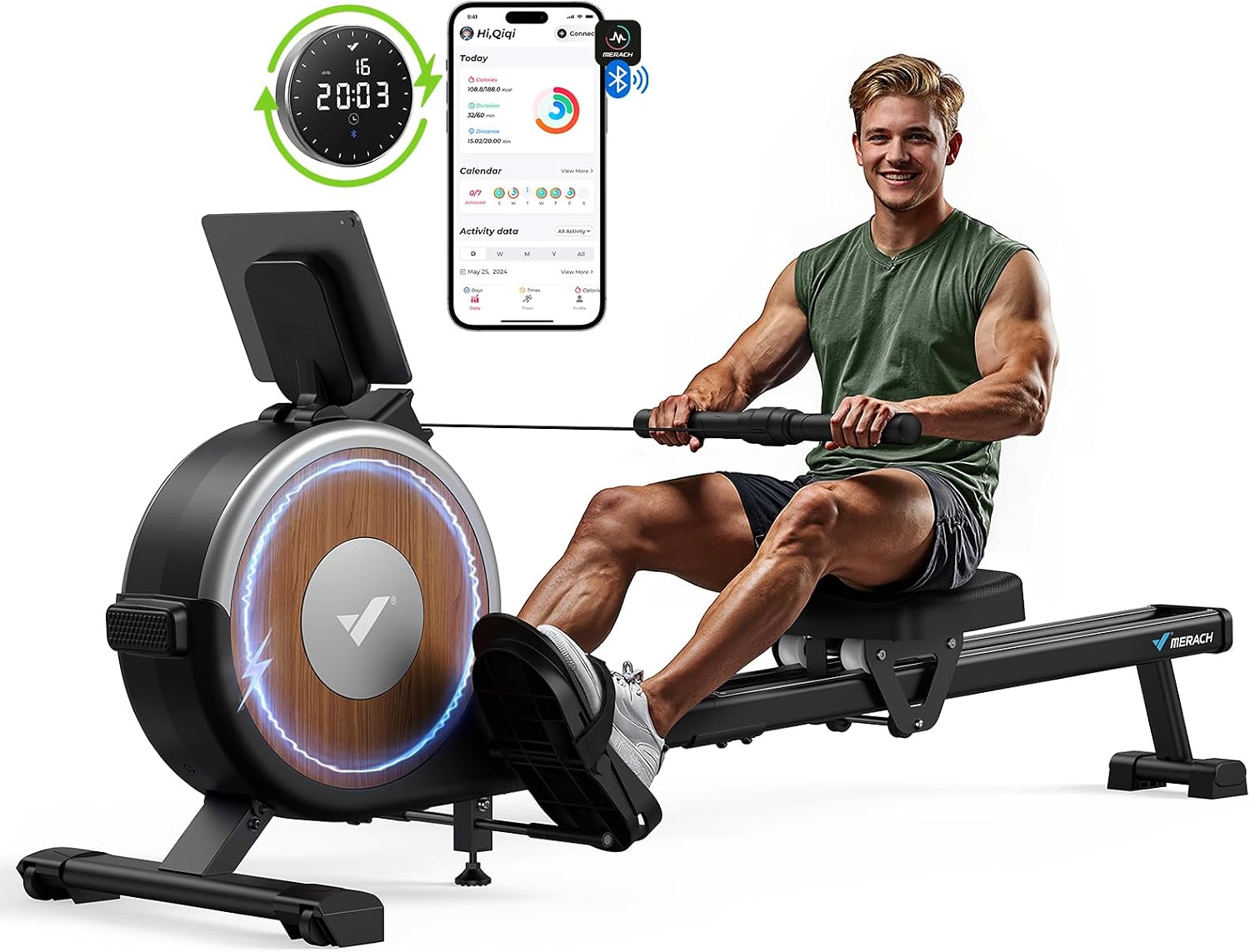
Merach Q1S Magnetic Rowing Machine Indoor, Dual Slide Rail, Quiet & Smooth
Quiet, smooth dual-rail glide, solid app integration, folds upright.
Visit on Amazon →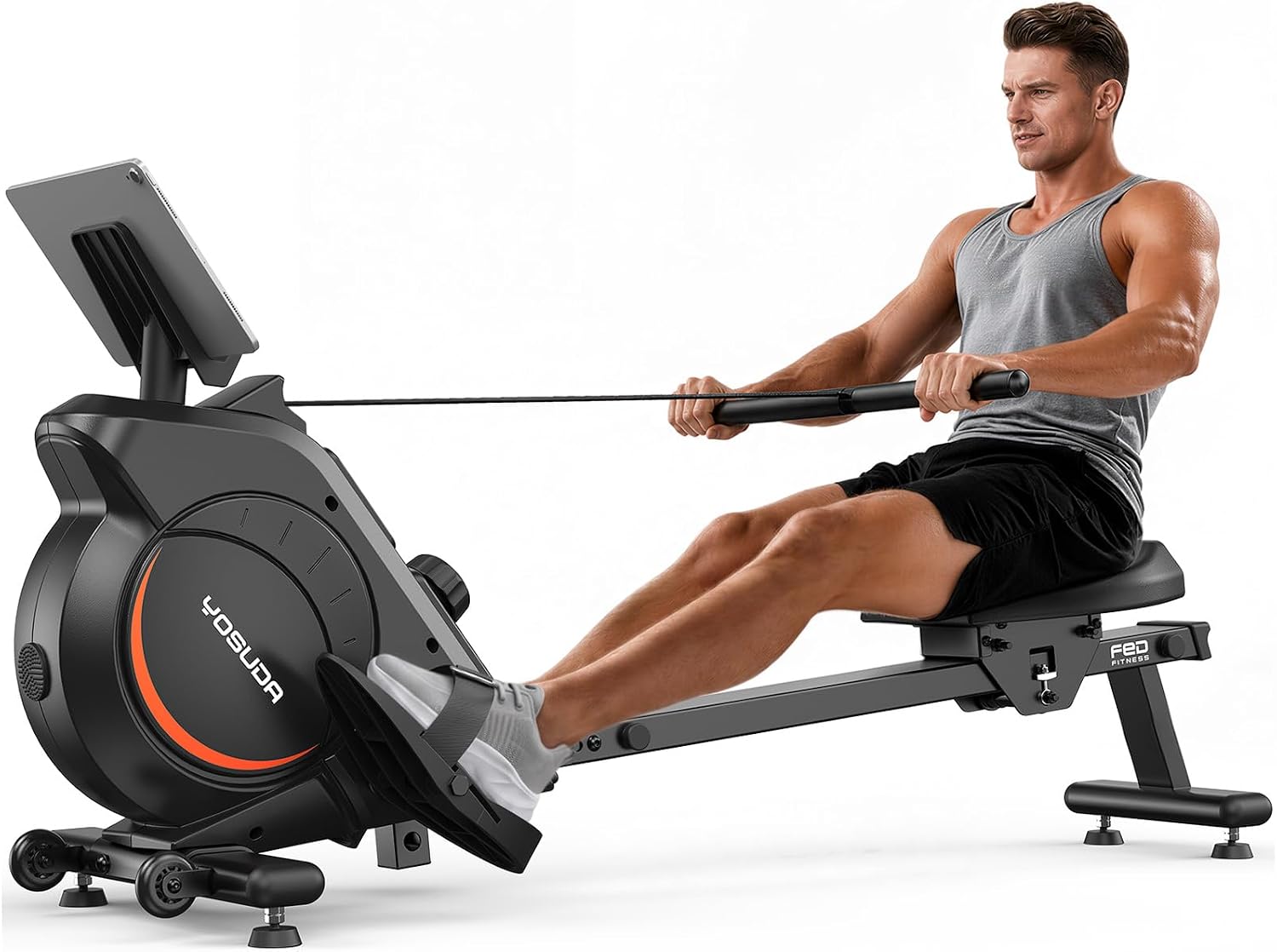
YOSUDA Rowing Machine for Home, Magnetic Rower with 16-Level Resistance
Quiet magnetic resistance, easy assembly, 16 levels, $269.99.
Visit on Amazon →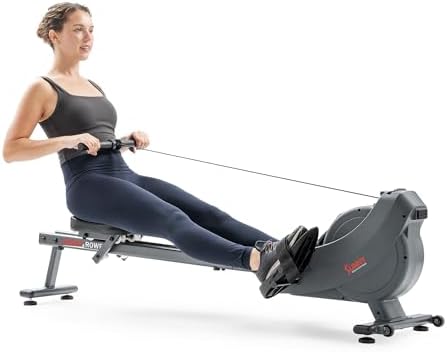
Sunny Health & Fitness Smart Magnetic Rower, Compact Quiet & Smooth Rowing Machine for Full-Body Cardio Exercise, Free SunnyFit Training App Connection
Nice Bluetooth app, compact footprint, smooth glide.
Visit on Amazon →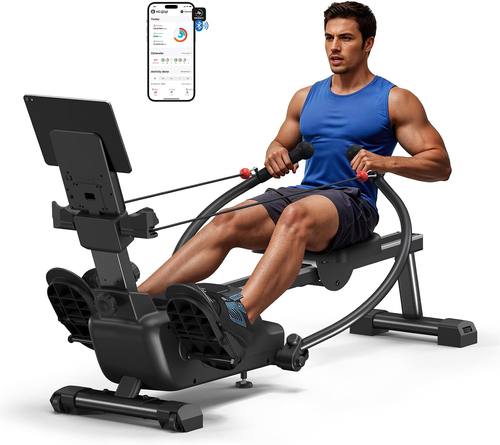
Merach RS3 Scull Rowing Machine for Home, Simulate Real Row, Ergonomic Seat
Simulates real sculling motion, great for technique work.
Visit on Amazon →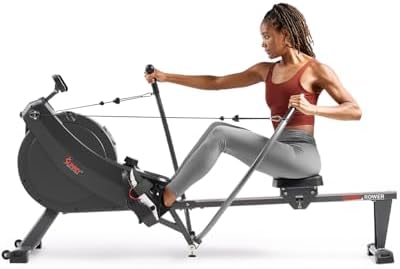
Sunny Health & Fitness Smart 360° Dual-Function Magnetic Rowing Machine, Full-Motion Workout with 51-Inch Extended Rail, Total-Body Training for Home, Free SunnyFit APP Connection
Dual-function rower and resistance trainer, versatile.
Visit on Amazon →How I Tested
I didn’t just row these for ten minutes and write down my feelings. I spent weeks on each machine. Twenty-minute steady-state sessions, sprint intervals where my lungs burned, and the tall-person test.
I’m 6’0”, 190 pounds, and I’ve coached enough people to know that a machine that works for me might be hell for a 5’2” beginner.
So I also had friends of different sizes come by my garage and pull on them. Mabel, my 55-pound lab mix, was the official seat-tester.
If she didn’t roll off mid-stroke, the glide was smooth enough.
I packed and unpacked these, moved them from my garage to my living room, and used them as my daily rower for weeks at a time. I timed assembly. I read the instructions, which were sometimes not the best.
I tested the device holders with a tablet in a thick case, something multiple buyers warned me about.
I checked the noise level, because magnetic rowers are quiet but not all quiet is the same. And I tracked my splits on every single one, because split time is the only metric that matters.
Analysis & Test Results
Each machine was tested on the same five things: drag consistency, monitor quality, seat glide, assembly experience, and storage. Here’s what I found.
Drag consistency is everything. A machine that gives you a smooth, consistent pull through the entire stroke is worth more than one that claims 16 levels of magnetic resistance but feels like a rubber band.
The Concept2 is the benchmark here. The air resistance is linear, meaning the harder you pull, the more resistance you feel.
It rewards power and technique. The magnetic rowers are smoother and quieter, but some of them have a dead spot at the catch.
The Merach Q1S and the YOSUDA both did well here. The Sunny 360° felt a little jerky at the start of the drive.
The monitor matters more than most people think. If you can’t see your split, you’re not rowing, you’re just pulling. Calories are a vanity metric. Split is the truth. The Concept2 PM5 is the gold standard.
It’s built like a tank, shows split, stroke rate, and watts, and has Bluetooth. The budget monitors are the weakest link.
They’re small, battery-powered, and crack if you look at them wrong. One buyer, a grandfather whose granddaughter dropped the handle from 8 to 10 inches, had three big crack lines running across his screen.
The company sent a free replacement within a week. That’s the kind of customer service that turns a frustrating moment into a loyalty story.
The seat glide is the difference between a workout and a chore. A seat that catches or wobbles ruins the stroke. The dual-rail designs, like the Merach Q1S, are particularly smooth. The single-rail budget rowers can feel a little less stable, but the YOSUDA held up fine.
Assembly is where budget rowers lose points. The instructions aren’t the best. Multiple buyers have been confused by the guide bar screws. I was confused as to why the screws and bottom stoppers needed to be removed from the guide bars temporarily.
This is so the seat can be put in place. It’s a simple step once you figure it out, but the manual doesn’t explain it well.
If a company can’t write clear directions, they probably cut corners elsewhere too.
Storage is a deception problem. Product photos lie. These machines don’t fold, they stand upright. That’s fine if you know what you’re getting, but it’s a surprise for people expecting a fold-flat design. The Merach Q1S and the YOSUDA both stand upright and take up less floor space than you’d think.
The Concept2 RowErg, Best Overall
The Concept2 is the machine you see in every CrossFit box, every rowing club, every hotel gym that takes fitness seriously. I’ve coached on these for over a decade. The Model D, now the RowErg, is not flashy. No fancy app, just a monitor that shows you split, stroke rate, and watts. That’s all you need.
It’s also ~$1,150. For a lot of people, that’s a real barrier. And honestly, for a beginner who just wants to get some cardio in before work, it might be overkill. But if you’re serious about rowing, if you want to track your progress and compete with yourself, this is the machine.
Nothing else comes close. The drag is consistent, the seat glides smooth, and the monitor is built like a tank.
I’ve seen these survive years of CrossFit abuse. Dropped, slammed, sweated on, and they still work perfectly.
The customer service is part of the product. When my friend’s monitor cracked when his granddaughter dropped the handle, the company sent a free replacement within a week. That’s the kind of support that turns a budget buy into a lifelong recommendation. For the serious rower, the cost per day over ten years is pennies. It’s the gold standard for a reason.
Merach Q1S, Editor’s Pick, Best for Most People
This little “cheap” rower is great. The Merach Q1S surprised me. The dual slide rail design gives it a glide that feels more stable than most single-rail budget rowers. The resistance is magnetic and quiet, far quieter than the whoosh of a Concept2. If noise is your concern, magnetic is the way to go.
The monitor is a little cheesy but it gets the job done. It shows time, distance, and split, which is more than many budget monitors offer. The device holder is fine for a phone, but if your tablet has a thick case, you might be worried it will fall off mid-workout. I’ve watched more than one iPad wobble dangerously close to the floor.
Assembly took about 45 minutes solo. The instructions were mostly clear, but I had to pause a few times to figure out the guide bar situation. The foot straps are long, and I really have to scrunch up to get the right angle on them. But the rail is plenty long for my 6’0” frame.
The price is the story here. At around ~$320, it’s less than a third of the Concept2. That’s less than three months of a gym membership, and you’ll own it for years. It’s quiet enough to use while the family watches TV, and it tucks out of the way in a corner. For the value of it, it is well worth the price.
YOSUDA Rower, Best Value
One buyer put it perfectly: “I honestly wish I had not waited so long to buy it.” That’s the YOSUDA. At around ~$280, it’s the cheapest machine here that I’d actually recommend to a beginner. The magnetic resistance is smooth and consistent, and the seat glides quietly on a single rail.
The monitor is basic. It shows the essentials, time, distance, and calories, but it’s small and the screen is a little cheesy. It doesn’t show split, which is a miss for anyone who wants to track progress properly.
The device holder is also a weak point. It’s fine for a phone, but a tablet with a case will wobble. One buyer, who purchased in March, told me he worried his iPad would fall off mid-workout.
Assembly took about 30 minutes. The instructions are not the best, but they’re manageable. The foot straps are too long, and I have to scrunch up to get the right angle. But the machine itself feels solid. It doesn’t wobble, even at a hard sprint. It stands upright for storage, which is a nice touch.
For the price, this machine is a bargain. It delivers just as good a workout as the Concept2 I have used at my gym, at a fraction of the cost. It’s quiet, smooth, and gets the job done. If you’re a beginner on a budget, this is the one to buy.
What Else to Consider
Sunny Health & Fitness Smart Magnetic Rower: The storage king. It’s compact, folds upright easily, and the Bluetooth app is surprisingly good. The downside is the resistance caps out lower than I’d like for a strong rower. It’s best for beginners and lighter rowers who want a quiet, space-saving machine.
Merach RS3: The technique specialist. The sculling motion simulates real on-water rowing, which is great for form. But it’s a niche machine. If you just want cardio, the fixed-arm rowers are more efficient. It’s a good second machine for a serious rower, not a first.
Sunny Health & Fitness 360°: The versatile one. It works as a rower and a resistance trainer, which is cool in theory. But the 360° arm adds complexity, and some buyers found it gimmicky. It’s fine if you want variety, but I’d rather have a dedicated rower that does one thing well.
Should You Buy a Budget Rower?
If you’re a beginner who just wants to get some cardio in before work, you don’t need a ~$1,000+ investment. You need a machine that’s quiet, smooth, and easy to use. You need something that doesn’t require a subscription to function.
The YOSUDA and the Merach Q1S both fit that bill. They’re not perfect. The monitors are cheesy, the instructions aren’t the best, and the device holders might not fit your tablet.
If you’re serious about rowing, if you want to track your progress and compete with yourself, save up for the Concept2. It’s the gold standard for a reason. But for everyone else, the budget machines have come a long way. Some of them genuinely match the feel of a Concept2. I was surprised. You will be too.